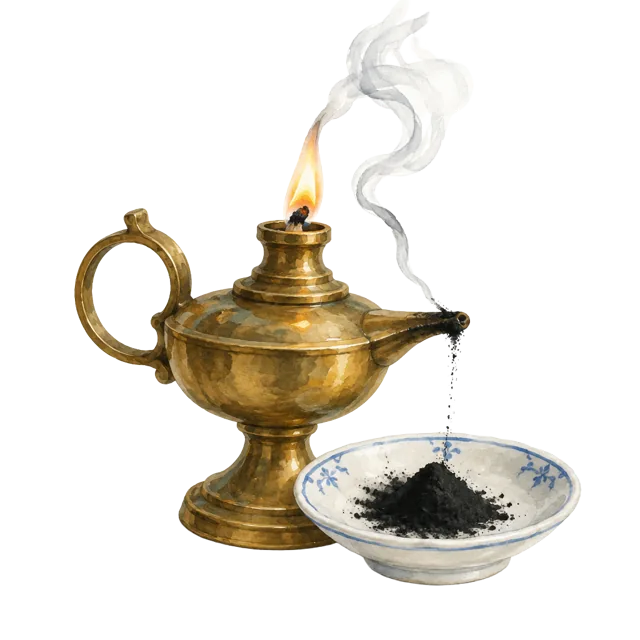
Lamp black takes its name from its method of production. Fine soot was collected and prepared as a colourant for inks and paints. It is an example of a historic pigment made through a process, rather than simply dug from the ground.
Fine carbon particles absorb light and create black. In mixtures, black can lower lightness and mute stronger colours; the resulting undertone depends on the particular black and the other ingredients.
Modern carbon blacks have varied manufacturing routes and particle characteristics. The traditional name is not a guarantee of the production method used today, nor evidence that all black pigments are interchangeable.
These articles explain pigment and mineral families, not the sourcing or complete formulation of any Cameron Colours paint. Historical names can cover different materials. Follow the product guidance and safety data for the paint you use; do not handle or heat raw pigment powders at home.