Brush Marks and Picture Framing: How to Get an Even Finish
A little brush texture is character. Ridges and frames are technique.
There are two brush problems people search for. One is heavy brush marks: ridges and drag lines on doors, skirting and furniture. The other is picture framing: a band around the edges of a wall, where it was cut in with a brush, that looks darker, lighter or shinier than the rolled middle. Both come from the paint going on at a different thickness or drying before it is finished. Both can be fixed, and both are easy to avoid once you know why they happen.
At a glance
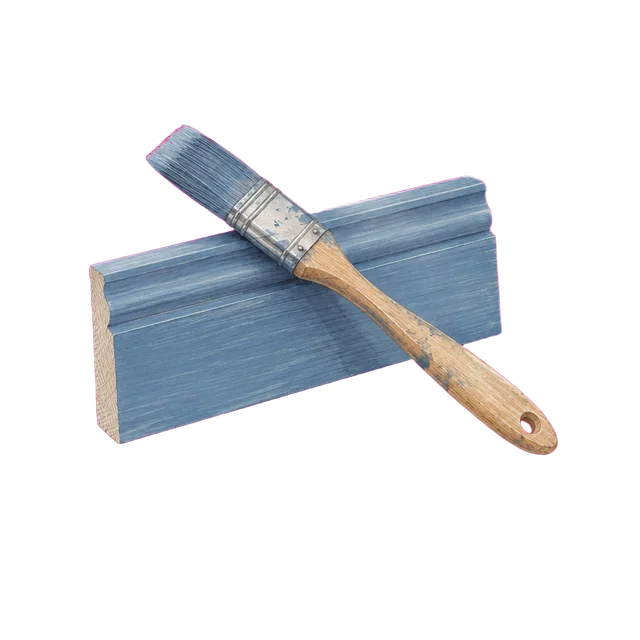
- Picture framing comes from cutting in the whole room first and rolling later.
- Cut in one wall at a time and roll it while the edges are still wet.
- Heavy brush marks come from overworking paint as it tacks off.
- A slight brush texture on woodwork is normal and part of a hand-painted finish.
- Fix ridges by sanding the whole surface lightly, then one careful coat.
Picture framing: the band around the wall
Brushed edges dry thicker, or drier, than the rolled middle.
A brush lays on a thicker coat than a roller and leaves a different texture. If you cut in around a whole room and then come back to roll, the brushed band has dried by the time the roller meets it. The result is a frame around each wall or ceiling that catches the light differently, often with a visible line where roller meets brush.
The fix is a full coat over the whole wall, done the right way: cut in one wall, or one section of ceiling, then roll it straight away, bringing the roller as close to the edges as you can so it rolls over the wet brushwork. Keep the brushed band narrow, a few centimetres, and feather it out. Stir the paint thoroughly and use the same tin, or mix tins together, for cutting in and rolling.
Heavy brush marks on woodwork and furniture
Overworking paint that has started to tack off.
Brush marks become ridges when paint is brushed back and forth after it has started to tack off, when the brush is too dry, or when a coat is too heavy to flow out. Old, worn or natural-bristle brushes make it worse with water-based paint. Cold air slows paint down; warm, dry air and direct sun make it tack off quickly, leaving less time to work.
Load the brush well, apply the paint across the section, then lay off with light, long strokes in one direction, with the grain on wood, and leave it. Work in manageable sections, panel by panel on a door, so you are always brushing into wet paint. Resist going back to a section that has started to set.
How to fix ridges and framing
Even out the texture first, then one careful coat.
Let the paint dry fully. If you can feel ridges, lightly sand the whole surface, not just the worst marks, so the texture is consistent, then wipe off the dust. Apply one careful coat over the entire wall, door or piece using the method above.
In older homes, take care before sanding old woodwork. Lead was widely used in paint until the 1960s and can be found under later layers. If old paint is sound, key it with wet abrasive paper rather than dry sanding, and never dry sand or burn off old paint that may contain lead.
Where our paint helps, and where it cannot
Self-levelling smooths ridges but keeps a hand-painted feel.
Our paints are self-levelling, so brush marks flow out as the paint dries rather than setting as ridges. When brushed, they are designed to keep a slight brush texture, because a hand-painted look is often exactly what people want on doors, skirting and furniture. High opacity means you can apply thin coats and still get solid colour in two coats, though three may be needed depending on the surface. What self-levelling cannot fix is paint brushed after it has tacked off, so finish each section and move on.
Sample it the way we would
Step 1
Paint your peel-and-sticks
Each £5.99 sample comes with three paintable peel-and-sticks. Give them two coats and let them dry fully.
Step 2
Stick them around the room
Put them on two or three walls, including the wall opposite the window, at eye level and lower down.
Step 3
Live with them for a day or two
Look in the morning, the afternoon and under your evening lamps. Move them around until you are sure.
Your questions, answered
What is picture framing in painting?
A visible band around the edges of a wall or ceiling where it was cut in with a brush, caused by the brushed edges drying at a different thickness to the rolled middle.
Should I cut in the whole room first?
Not with fast-drying water-based paint. Cut in one wall at a time and roll it while the edges are still wet.
How do I paint a door without brush marks?
Work panel by panel in a set order, lay off with light strokes in one direction and do not go back to paint that has started to set. Expect a slight brush texture with a brushed finish.
Will a roller avoid brush marks on doors?
A small short-pile mini roller on flat panels helps, followed by light laying off with a brush where needed.
Keep exploring
Roller Marks and Stripey Walls or Ceilings: Causes and Fixes
Stripes are a record of how the paint went on. Change that, and they go.
Paint Drips and Runs: How to Fix and Prevent Them
Catch a run in the first few minutes, or leave it to harden and sand it flush.
Why Is My Paint Patchy? How to Fix Uneven Walls and Ceilings
Patchy paint usually means the wall underneath is uneven, not the paint.