Why Is My Paint Peeling? Causes and Fixes
Paint rarely fails on its own. Find the cause, and the fix lasts.
Paint peels when it loses its grip on the surface underneath. Almost always, that comes down to one of five things: moisture, a dusty or powdery surface, grease or polish, a glossy finish that was never keyed, or an old coating that was already letting go. More paint on top won't cure any of them. The good news is that every one can be diagnosed in a few minutes and fixed properly with patience rather than expensive products. Here's how we'd do it.
At a glance
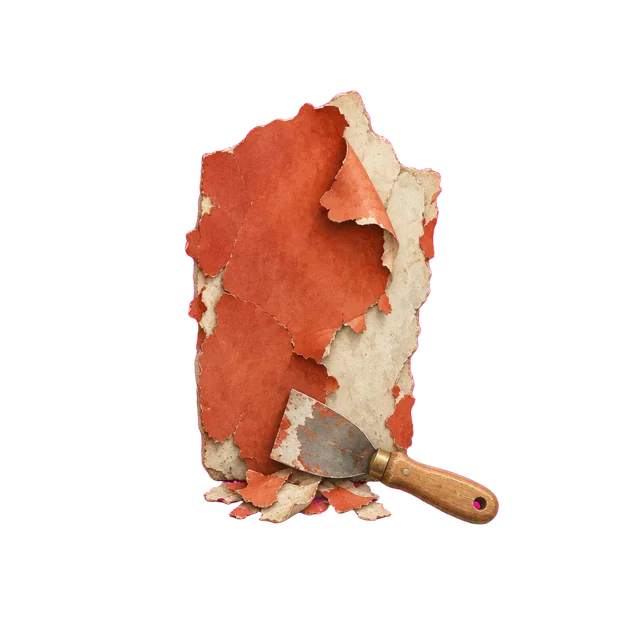
- Peeling is an adhesion failure: the paint has lost its grip on what is underneath.
- Fix the cause first. Damp, dust, grease and gloss defeat any paint.
- Scrape back to a firm edge, feather the edges, then clean and dry.
- Prime only where the surface needs it: bare plaster, bare wood, powdery or oil-based finishes.
- Fresh paint takes 7 days to reach full adhesion, so be gentle in the first week.
First, look at what has come off
The back of a flake tells you the cause.
Pick off a loose flake and turn it over. If the back is coated in fine white or coloured powder, the paint was laid on a dusty or powdery surface: often old distemper, chalky masonry or sanding dust that was never wiped away. If the back is clean and smooth and the surface beneath is shiny, the paint never bonded to a glossy or greasy finish. If the flake is soft or damp, or comes away with salt crystals or crumbling plaster behind it, moisture is the culprit.
Look at where it is happening, too. Peeling on a bathroom ceiling, above a shower or on a cold outside wall points to condensation. Peeling low down on a ground-floor wall points to damp coming through the wall. Peeling in sheets on newly plastered walls usually means the plaster was not fully dry, or was painted without a sealing mist coat.
Moisture: the most common cause
Damp pushes paint off from behind, whatever the tin.
Water is the enemy of adhesion. Condensation, a leaking pipe, a blocked gutter, rising or penetrating damp: if moisture is getting into the wall, it will eventually push any paint film away from it. Painting over damp only hides it for a while. Find and fix the source first, then let the wall dry out completely before you decorate. After a real leak, that can take weeks rather than days.
In older, solid-walled houses, moisture also needs a way out. Sealing lime plaster or old brick under an impervious modern coating can trap moisture in the wall. If your house is old and the walls are lime, take conservation advice before you paint, and be honest about whether a modern paint is the right finish at all.
In bathrooms and kitchens, ventilation does more than any paint can. Run the extractor fan, open a window after a shower and wipe away standing condensation. Our Bathroom Wall Paint has a tough, moisture-resistant, Class 1 scrubbable film made to resist the impact of mould and to stand up to regular cleaning. It is not a fungicidal paint, and no paint replaces good ventilation or fixing a leak.
Dust, powder, grease and gloss
Paint can only stick to a clean, sound surface.
Paint bonds to whatever it touches. If that is sanding dust, cooking grease, furniture polish, nicotine or the powdery face of old distemper, the paint is bonded to the contamination rather than the wall, and comes away with it. This is behind most peeling on old ceilings, kitchen walls and woodwork that has been polished for years.
Gloss is the other big one. Water-based paint applied straight over old oil-based gloss or eggshell, without sanding, has nothing to grip. It can look perfect for weeks, then lift off in strips the first time it is knocked or masked with tape. Test old woodwork before you start: rub a small patch with a cotton pad dampened with methylated spirits. If colour comes off, the old paint is water-based; if it does not, treat it as oil-based, sand it and use an isolating primer.
How to fix peeling paint properly
Scrape, feather, clean, prime where needed, then repaint.
Scrape off everything loose until you reach a firm edge that will not lift. Sand the edges of the remaining paint so the step between bare and painted surface disappears; a sanding sponge follows a wall better than a block. Fill any damage, let the filler dry fully and sand it smooth.
Wash the whole area with sugar soap, rinse with clean water and let it dry completely. Then treat the bare patches for what they are: a thinned mist coat on bare new plaster, a stabilising primer where the surface is still powdery after scraping, an isolating primer over oil-based finishes, and a primer on bare wood or MDF.
Finish with two full coats of a paint made for the surface, 1–2 hours apart. Ours are touch dry in about 30 minutes, but give every coat its full recoat time before the next.
Where our paint helps, and where it cannot
Better adhesion helps, but preparation still does the work.
We started Cameron Colours because we were tired of paint that looked fine in the tin and let us down on the wall. Our paints are self-priming: on sound surfaces that have been correctly cleaned and keyed, they bond without a separate primer, which matters most on tricky surfaces like previously painted cabinets, melamine and uPVC. High-quality resins at high loadings build a tough, Class 1 scrubbable film, and high opacity means a big colour change does not tempt you into piling on thick coats.
What no paint can do, ours included, is stick to dust, grease, damp or a coating that is already letting go. Adhesion also keeps developing as paint cures: full adhesion takes 7 days, so a freshly painted surface is still fragile, especially on difficult surfaces such as melamine. Avoid knocks, masking tape and scrubbing until that first week is up.
Sample it the way we would
Step 1
Paint your peel-and-sticks
Each £5.99 sample comes with three paintable peel-and-sticks. Give them two coats and let them dry fully.
Step 2
Stick them around the room
Put them on two or three walls, including the wall opposite the window, at eye level and lower down.
Step 3
Live with them for a day or two
Look in the morning, the afternoon and under your evening lamps. Move them around until you are sure.
Your questions, answered
Can I paint over peeling paint?
No. New paint bonds to the loose layer, and the loose layer lets go anyway, taking the new paint with it. Scrape back to a firm edge first.
Why is my paint peeling off the ceiling?
In older houses, the usual cause is soft distemper underneath: a powdery, water-bound finish that modern paint cannot grip. Bathroom and kitchen ceilings also peel from condensation. Check the back of a flake for powder.
Why is paint peeling off my new plaster?
Either the plaster was not fully dry, or the first coat was full-strength paint rather than a thinned mist coat. Bare plaster is very absorbent and needs sealing first.
When can I use masking tape on fresh paint?
Give it the full 7-day cure where you can, and use a low-tack tape. Fresh paint is still building its adhesion.
Do I need a special primer to stop peeling?
Only where the surface needs one. Fixing the cause and preparing properly matters far more. On sound, clean, keyed surfaces our paints are self-priming.
Paint & Toolkit bundles