Can I paint uPVC windows and doors?
Yes, if the windows and doors are uPVC (plastic) or composite. Our uPVC & Composite paint is a flexible coating made for those surfaces; it is not breathable and is not suitable for wooden windows or doors. On correctly prepared uPVC, it bonds directly without a separate primer.
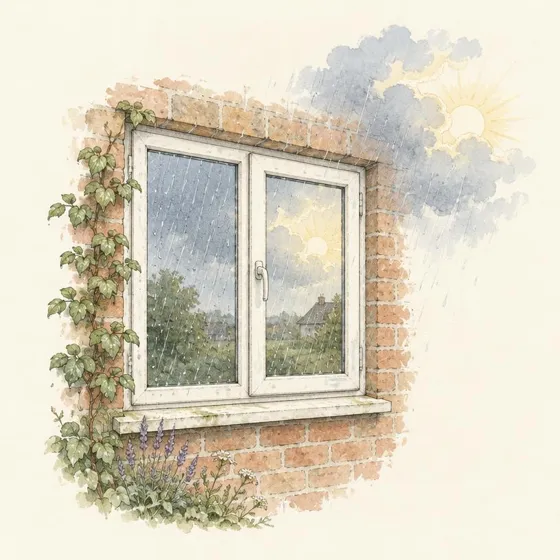
The one condition is age. The uPVC must have been in place and exposed to the weather for at least twelve months. New uPVC still carries mould-release agents and surface plasticisers from manufacture, and paint will not bond reliably to them. Weathering washes those residues away and very slightly opens the surface, which is exactly what you want.
How long does uPVC need to be weathered before painting?
At least twelve months of outdoor exposure.
This is the single most important rule of the job. Painting uPVC too early is the most common cause of peeling and flaking, and no amount of sanding will compensate for it. Chalky, slightly faded white plastic is a good sign — it means the surface is ready.
If you are unsure, paint a small inconspicuous area first, let it cure fully for seven days, then try to lift it with tape.
Do composite doors need to be weathered too?
No. Composite door skins are a different material and can be painted from new.
They still need the same cleaning and keying: wash with sugar soap, rinse, dry completely, then sand lightly with 320 grit along the direction of the moulded woodgrain.
Do I need a primer on uPVC or composite?
No. Our uPVC & Composite paint is self-priming on both substrates when they have been correctly prepared.
Preparation does the job a primer would otherwise do: sugar soap to remove grease and traffic film, a full rinse, complete drying, and a light key with 320 grit. Skip any one of those and no primer would save the finish anyway.
What grit sandpaper should I use on uPVC?
320 grit. You are dulling the sheen, not removing material.
Use flat paper on flat faces and a sanding sponge on beading, drainage channels, moulded panel detail and woodgrain texture — the sponge follows the profile instead of flattening it. Never use a coarse grit or a power sander: deep scratches in plastic cannot be filled out and will telegraph through the paint.
How do I clean uPVC before painting?
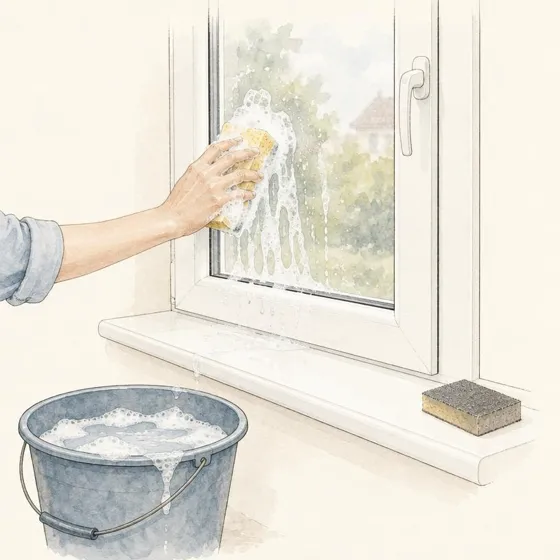
Wash the whole surface with a sugar soap solution — frame, sashes, beading, sills, door slab and edges — working from the top down.
Pay particular attention to drainage channels, the underside of sills and green algae staining at the bottom of frames. Then rinse thoroughly with clean water to remove every trace of sugar soap residue and dry with a microfibre cloth rather than leaving it to air dry.
Traffic film is invisible. A frame that looks clean almost never is.
What weather do I need to paint uPVC and composite?
A dry, still day between 10°C and 25°C with no rain forecast for at least six hours after your final coat.
Avoid strong direct sunshine on the surface you are painting — the paint skins over too fast and you lose your wet edge. Follow the shade around the building instead. Avoid windy days, which blow dust, pollen and insects into wet paint, and finish early enough that the last coat is dry before evening dew.
Should I mask the rubber seals?
Yes, always. This is the detail most people skip and most regret.
Paint that lands on a rubber gasket will crack, peel and can bond the door to the frame. Mask every seal with premium painter's tape, press the edges down firmly, and peel the tape away while the final coat is still slightly soft. If any paint has bridged onto a seal, part it carefully with a sharp blade rather than tearing it.
How many coats does uPVC and composite need?
Two full coats, applied thin, with 1–2 hours between them.
The first coat will look thin and patchy, particularly over a dark original colour. That is normal — resist the urge to overload it. The second coat delivers the depth of colour and the durability.
What tools should I use?
A good quality synthetic brush for beading, rebates, mouldings and edges, and a short pile microfibre roller for the flat faces of doors and wide frame sections.
Work detail first and flat faces second, so any brush marks in the mouldings are caught and smoothed as you roll past them. Synthetic bristles perform far better than natural bristles with water-based paint.
How long before I can close a freshly painted door?
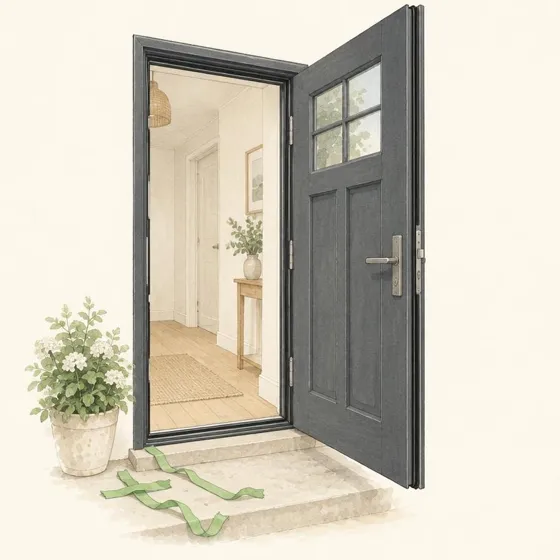
Leave the door open for at least 4 hours after the final coat, and longer in cool or damp conditions.
Closing a freshly painted door presses the paint film against the rubber seals, where it can stick and tear when you next open it. If the door must be closed for security, wait as long as you possibly can and close it gently.
Can I paint uPVC window frames without removing the glass?
Yes. Mask the glass tight to the glazing bead with premium painter's tape in long continuous lengths, pressing the inner edge down firmly with a filling knife so paint cannot bleed underneath.
If any paint does reach the glass, leave it until fully hard and then remove it with a glass scraper blade held at a shallow angle.
Can I paint a dark colour over a white uPVC door?
Yes. All 180 colours in our palette are available in uPVC & Composite paint, including deep, saturated shades.
Dark colours on south-facing doors absorb more heat, which is why the formula uses UV-resistant pigments and a flexible film that moves with the substrate rather than cracking.
Will the paint peel or crack over time?
Not if the preparation is right. Almost every failure on uPVC traces back to one of three things: the plastic was too new, the surface was not properly degreased, or it was never keyed.
Do those three properly and the finish is a flexible, UV-resistant film designed for full exterior exposure.
How do I clean painted uPVC and composite afterwards?
Wait until the full 7 day cure period has passed, then a slightly damp microfibre cloth is all that is needed for most marks. Soap and water handles anything more stubborn.
Avoid chemical cleaners, abrasive pads and pressure washers, both now and in future — they will damage the paint film over time.
How long does uPVC and composite paint take to dry?
Touch dry in around 30 minutes and recoatable after 1–2 hours in good conditions.
Full hardness takes 7 days. During that period avoid cleaning the surface, taping anything to it, or subjecting it to heavy use.
Can I touch up the paint later?
Yes — but stir the tin thoroughly first. Pigment settles over time and paint that has been sitting will not be the correct colour until fully mixed. Stir for 1–2 minutes with a drill and mixing paddle.
If you apply paint from an unstirred tin, the touch up will not match, and the remaining paint in the tin will be off going forward.
Will my colour match if I order more paint later?
Not guaranteed. Paint is made using naturally occurring raw materials that vary slightly from one production batch to the next. These shifts are small but can be visible when tins from different batches are used side by side.
Every tin within a single order is made from the same batch of base and the same batches of colourant. Our recommendation: order 10% more than you need and keep the surplus sealed.