Paint Science
The stories inside colour: where historic pigments came from, how they work and what their names really mean. Tap any underlined term across the site to find out more.
Earth pigments
The coloured earths behind many heritage colours.
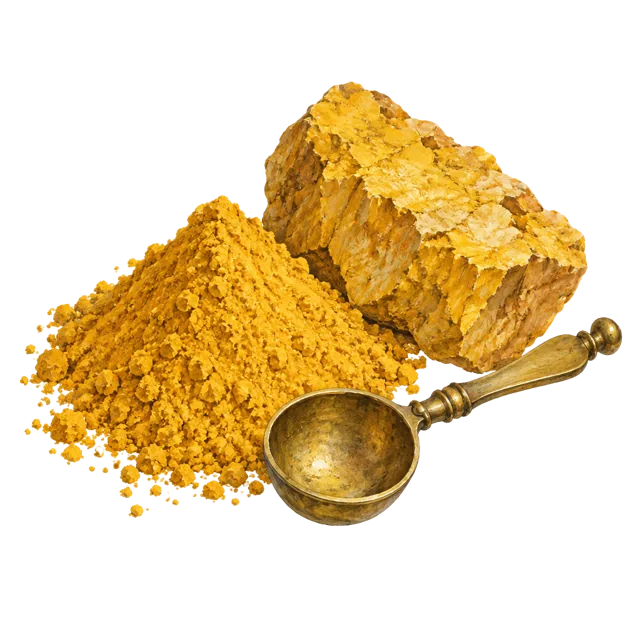
Yellow ochre
A yellow earth pigment whose warm colour comes largely from hydrated iron oxides, mixed with clay and other minerals.
Read guide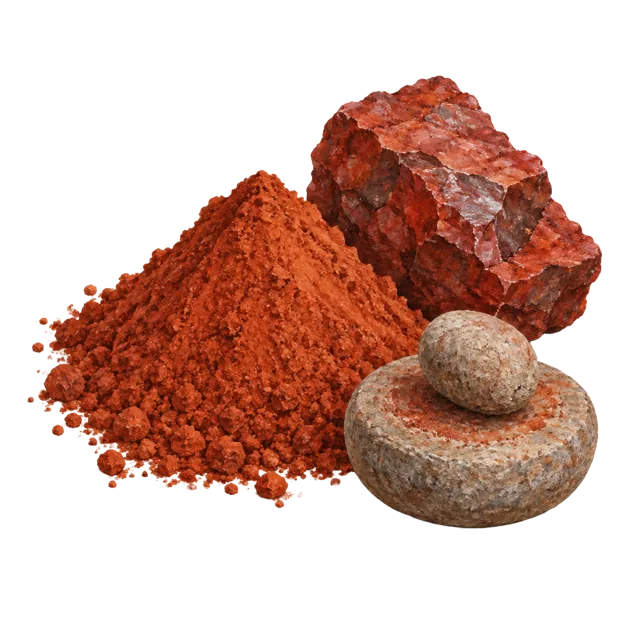
Red ochre
An iron-rich earth pigment, commonly coloured by hematite, that brings the familiar red of terracotta and rust.
Read guide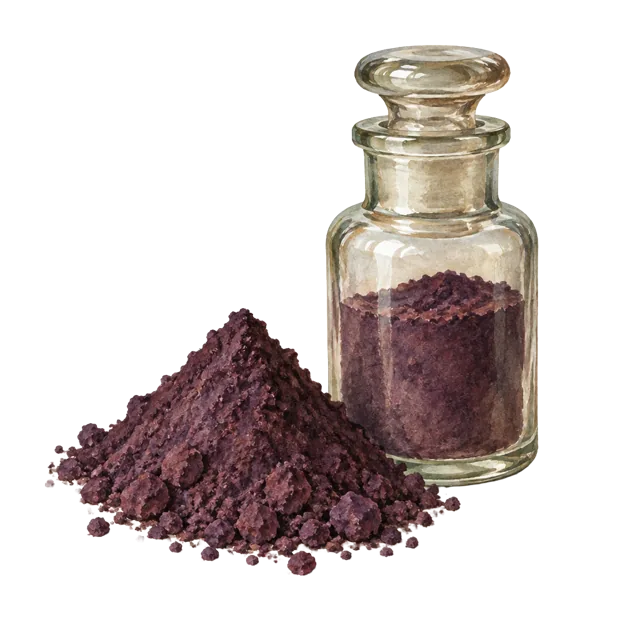
Violet ochre
A descriptive pigment name for muted violet-brown iron-oxide colours, often associated with the historic term caput mortuum.
Read guide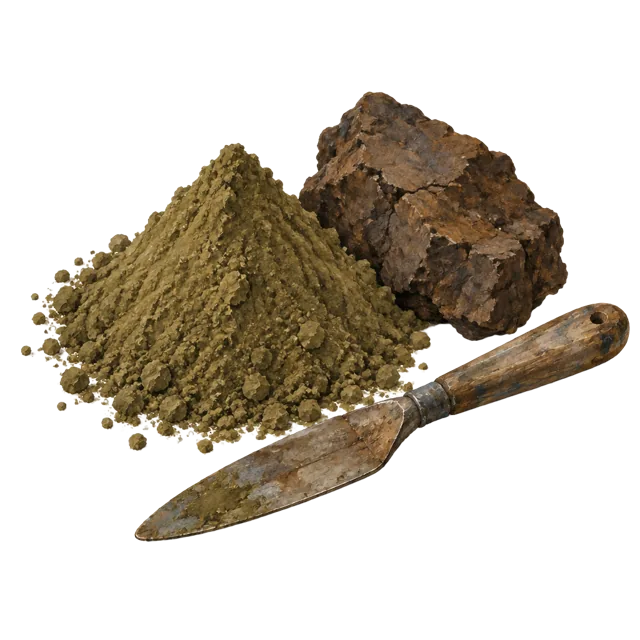
Raw umber
A natural brown earth containing iron and manganese compounds; raw distinguishes it from heat-treated burnt umber.
Read guide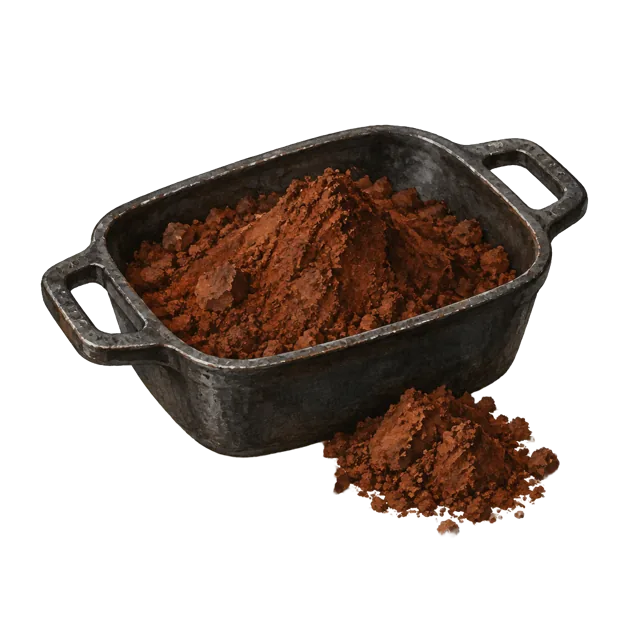
Burnt umber
Heat-treated umber, typically darker and redder than its raw starting material.
Read guide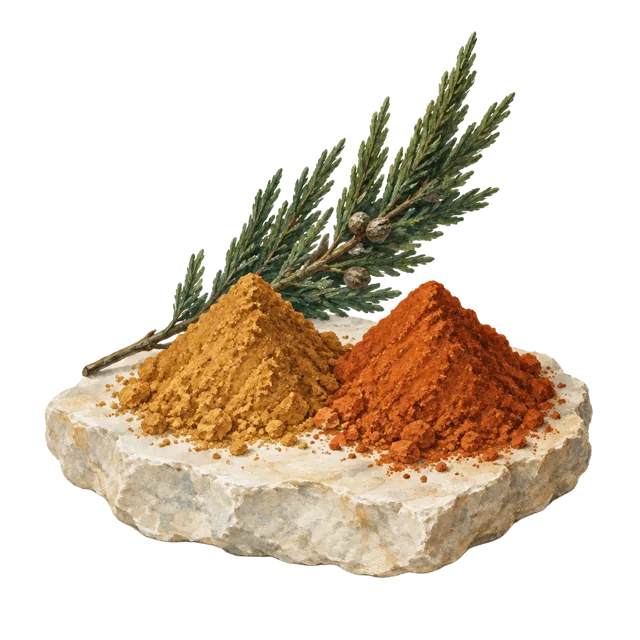
Burnt sienna
A warm red-brown earth pigment produced by heating raw sienna.
Read guide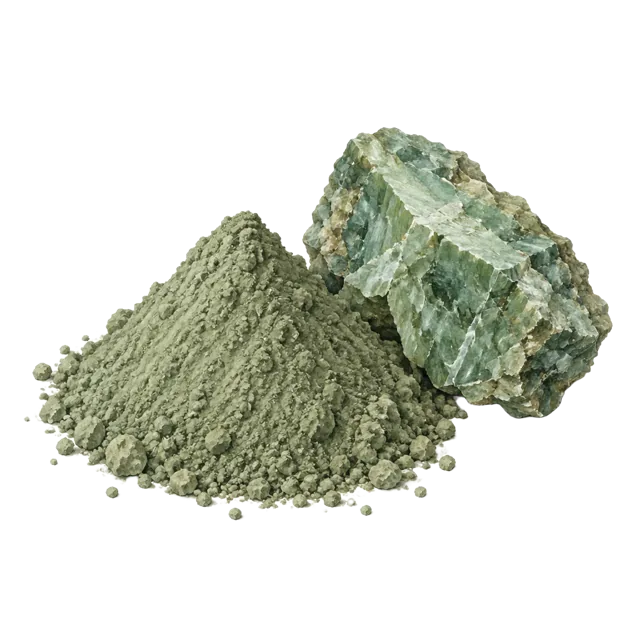
Green earth
A family of subdued green mineral pigments, often containing celadonite or glauconite.
Read guideMinerals & modern pigments
From carbon black to modern synthetic blues.
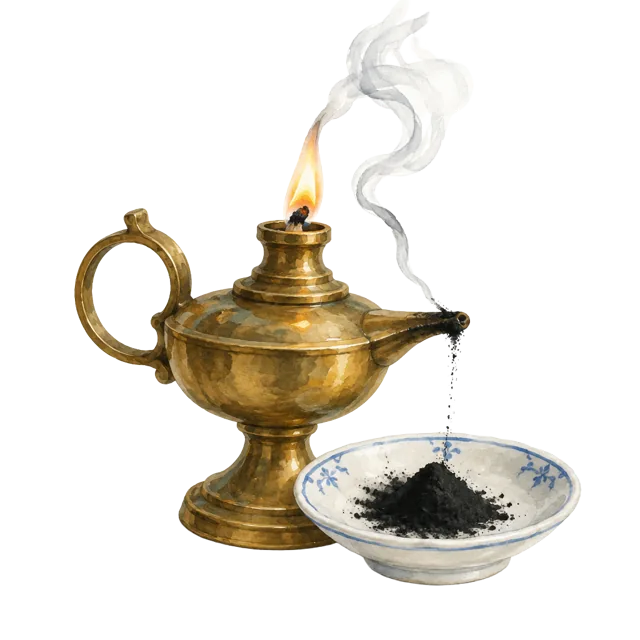
Lamp black
A carbon-black pigment traditionally made by collecting soot from burning oils, fats or resins.
Read guide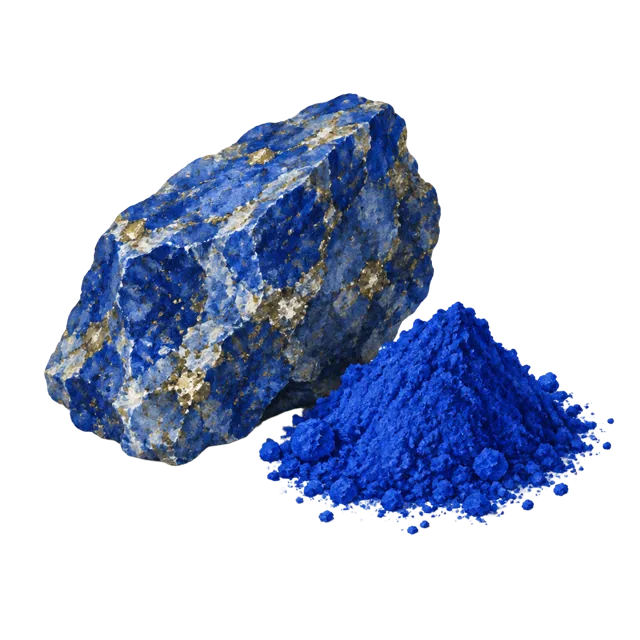
Ultramarine
A rich blue with two linked histories: costly natural pigment from lapis lazuli and manufactured ultramarine developed in the nineteenth century.
Read guide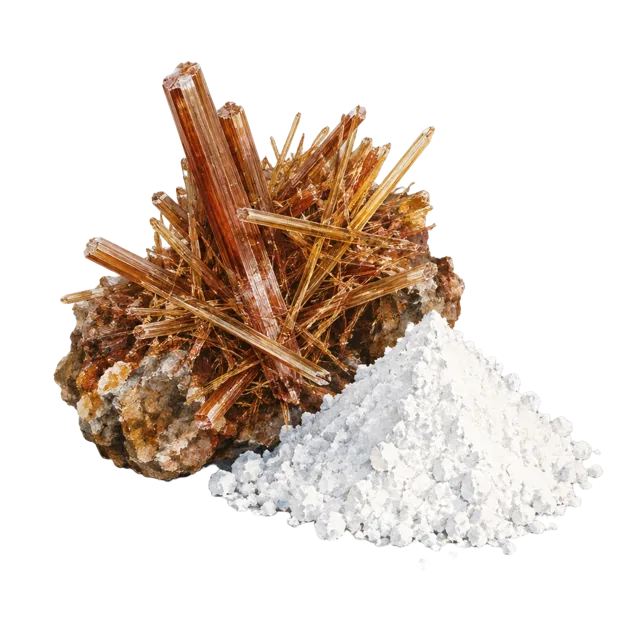
Rutile & titanium dioxide
Rutile is a crystalline form of titanium dioxide; manufactured titanium-dioxide pigments are important white colourants and light scatterers.
Read guide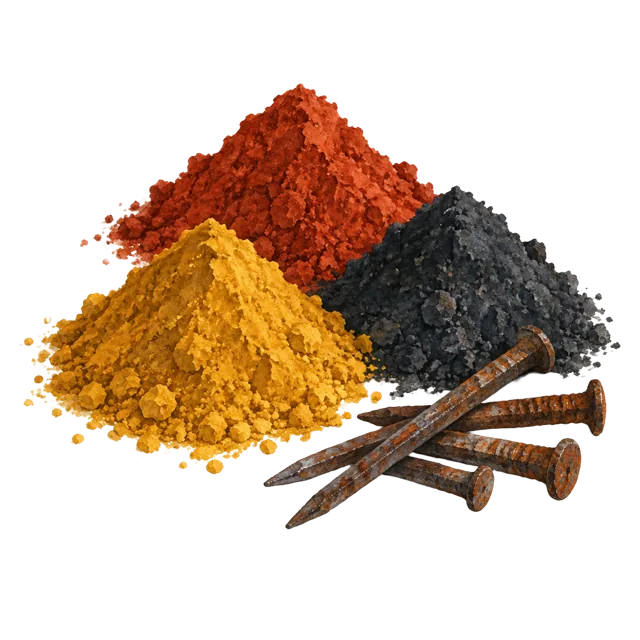
Iron oxides
A broad pigment family producing yellows, reds, browns and blacks, available from natural earths and manufactured sources.
Read guide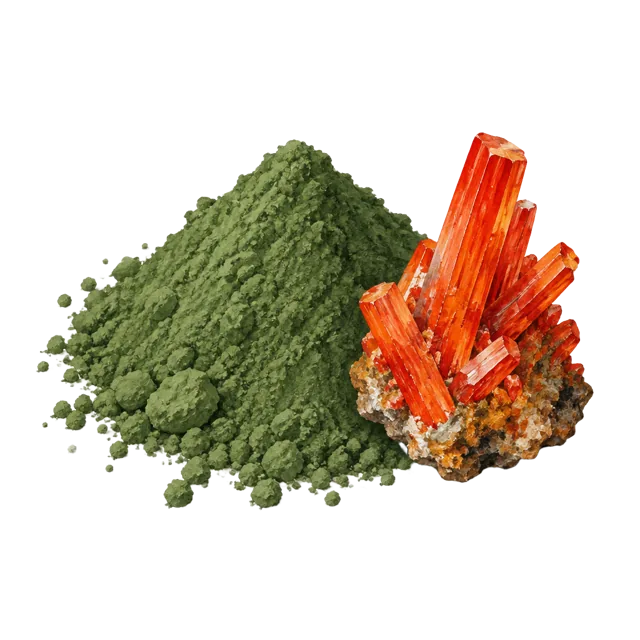
Chromium oxide green
An opaque, subdued green pigment based on chromium(III) oxide, distinct from green earth and viridian.
Read guide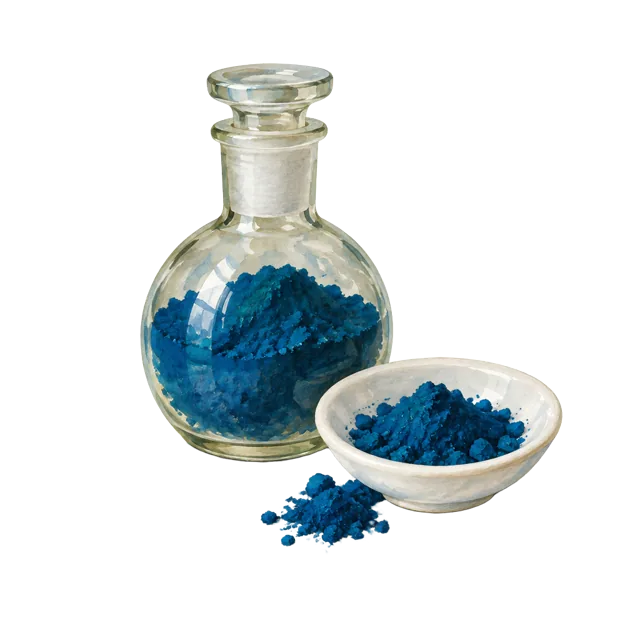
Phthalocyanine blue
An intense synthetic organic blue pigment based on copper phthalocyanine, commercialised in the 1930s.
Read guide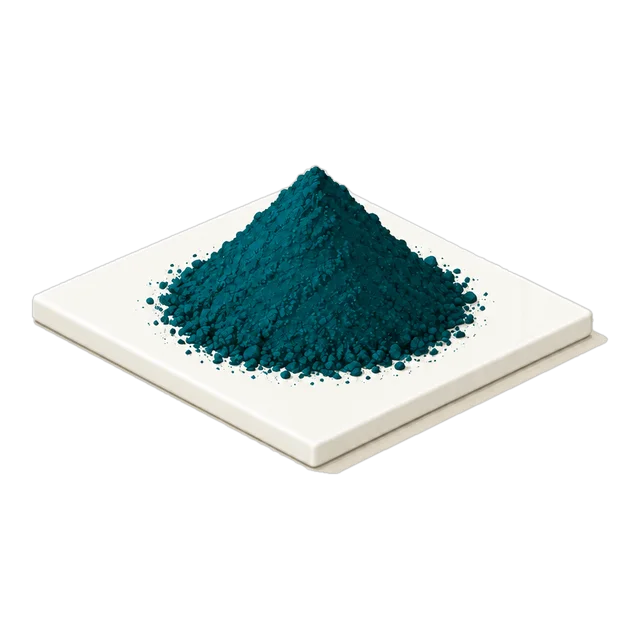
Phthalocyanine green
A strong, clean blue-leaning green made by chlorinating copper phthalocyanine, the chemistry behind phthalo blue.
Read guide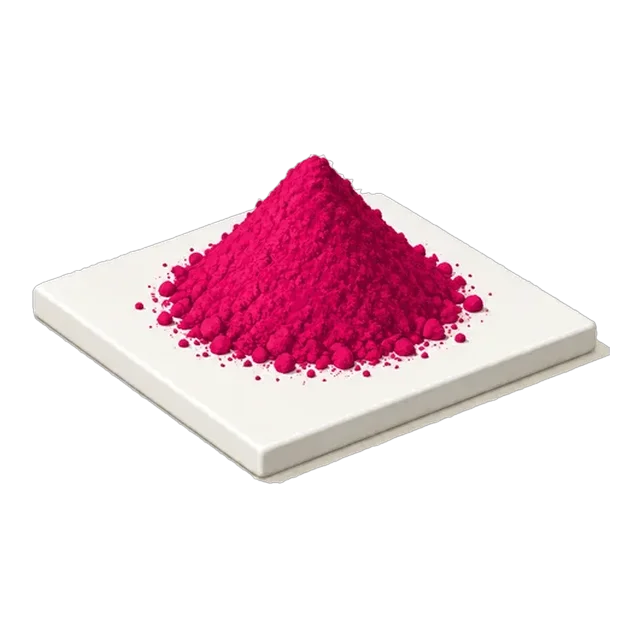
Quinacridone magenta
A clear, cool pink-red synthetic organic pigment used to build purples, deep pinks and violet-reds.
Read guide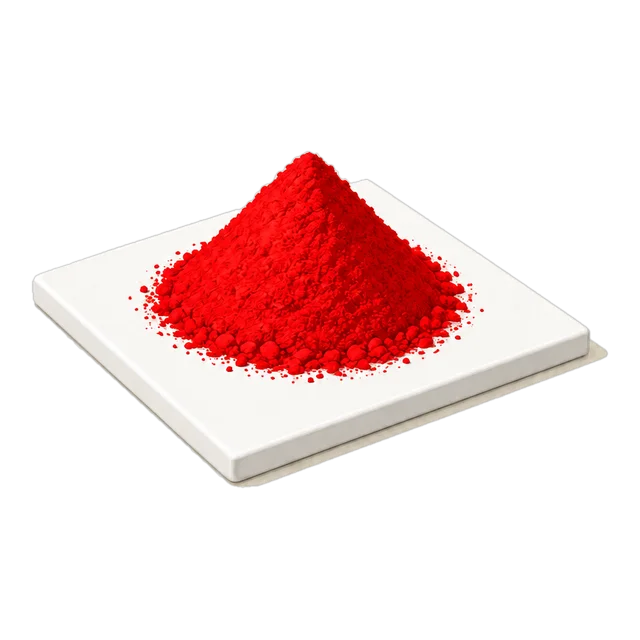
Pyrrole red (DPP)
A bright, high-chroma synthetic red from the diketopyrrolopyrrole (DPP) family, used for intense, clean reds.
Read guide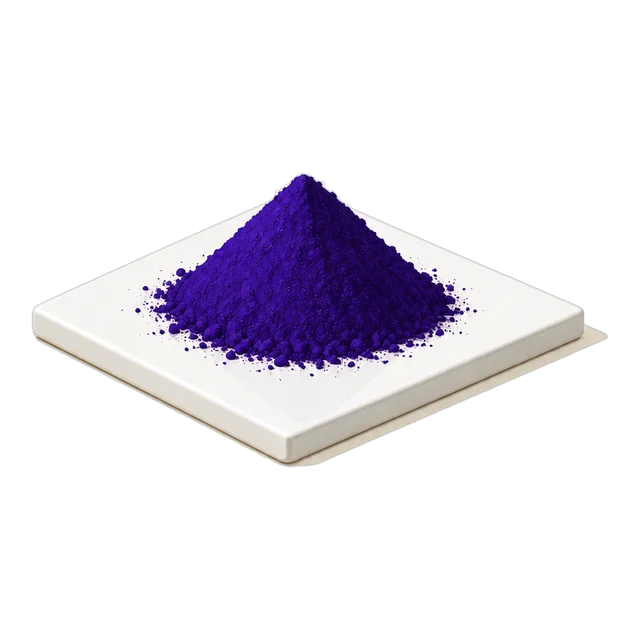
Dioxazine (carbazole) violet
A deep, very strong synthetic violet used for purple tones and for quietly neutralising yellow in pale colours.
Read guide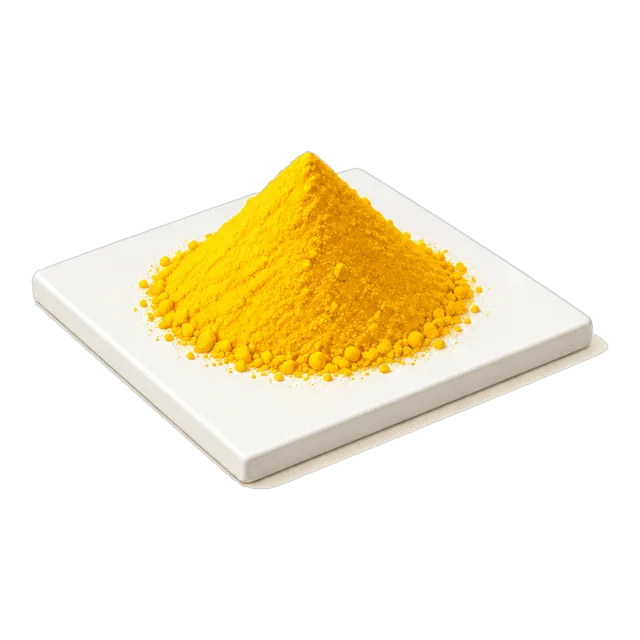
Organic yellows
Clean, vivid synthetic yellows from the monoazo and isoindolinone families, used where yellow ochre would be too earthy.
Read guide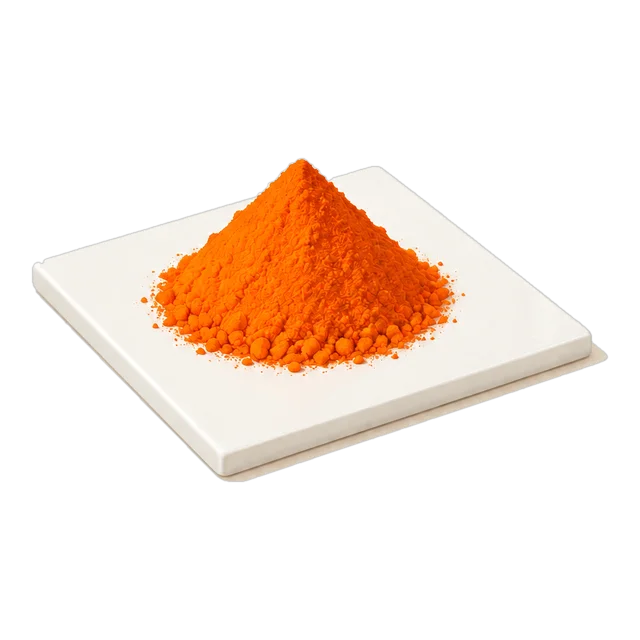
Organic oranges
Bright, intense synthetic oranges from the benzimidazolone and DPP families, used for clean, lively orange shades.
Read guide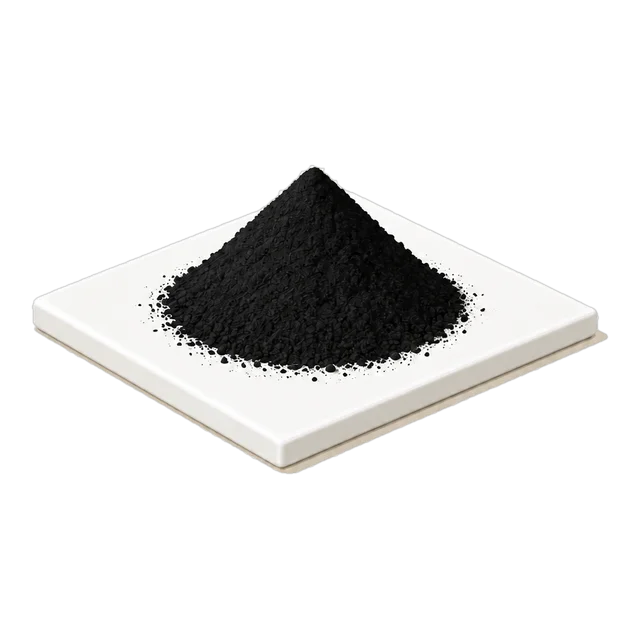
Carbon black
An intensely strong black made of fine elemental carbon, used for deep shading and mass-tone blacks.
Read guide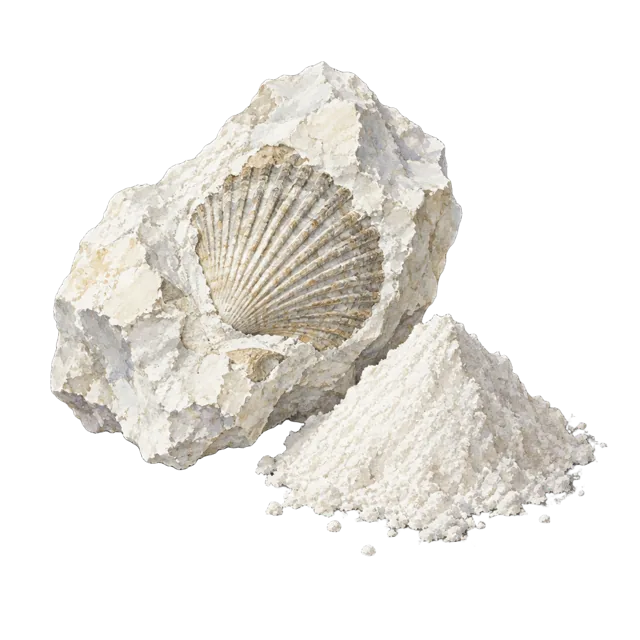
Chalk & calcium carbonate
A mineral compound found in chalk, limestone and marble, used in coatings as a white material, filler or extender.
Read guideHow pigments work
The processes and terms that explain colour.
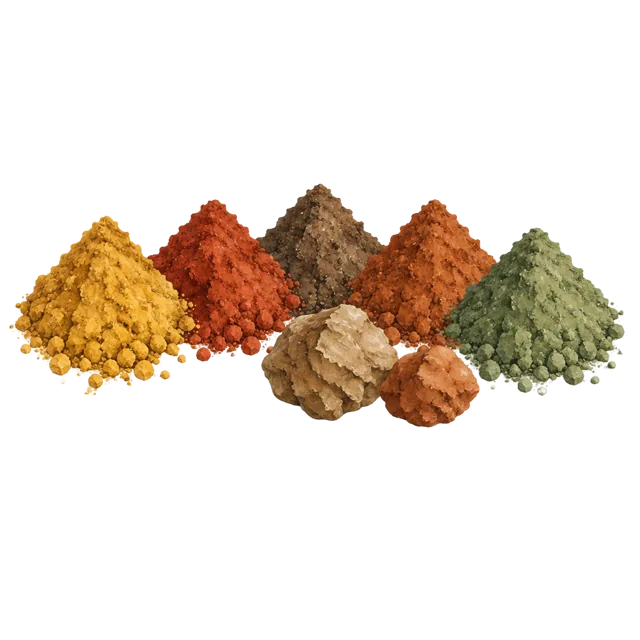
Earth pigments
A family of colouring materials prepared from naturally occurring mineral earths, including ochres, umbers and siennas.
Read guide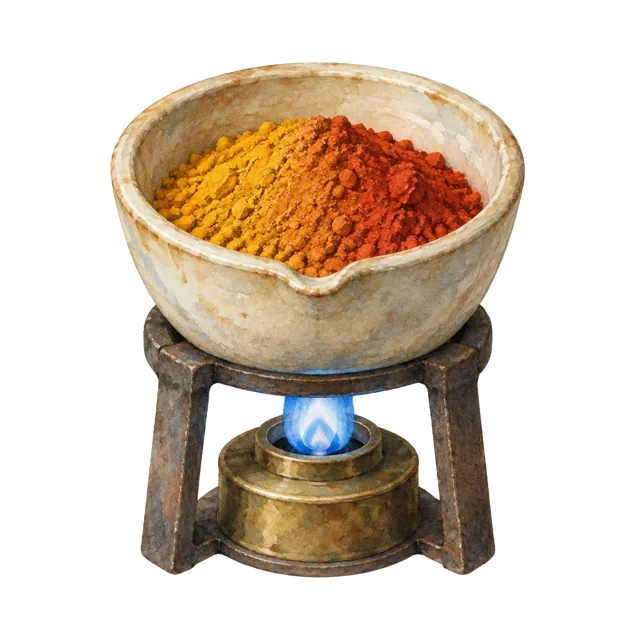
Calcination
Controlled heating that changes a material’s chemical or physical properties, including the colour of some earth pigments.
Read guide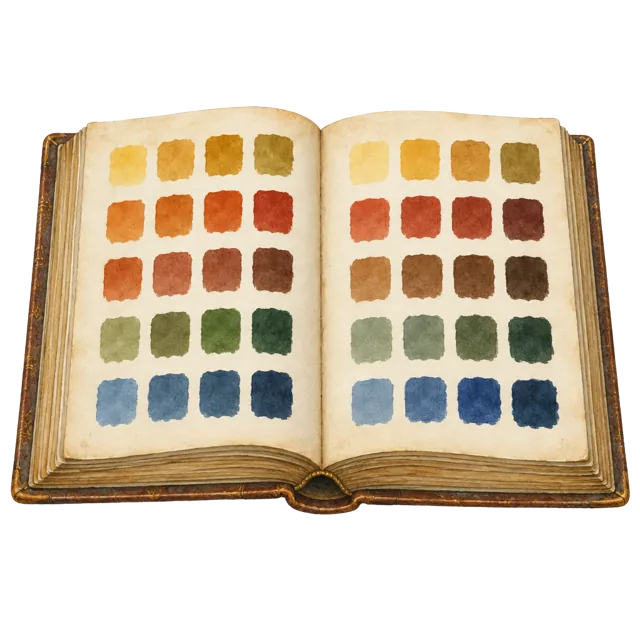
The Colour Index
A reference system for naming colourants, helping distinguish pigment identity from a marketing colour name.
Read guide
Lightfastness
Resistance to colour change caused by light exposure; not the same as a complete exterior-weathering rating.
Read guide
Clean and dirty colours
Clean colours are clear and bright. Dirty colours are softened with a touch of black, umber, grey or their opposite hue, so they look muted and complex.
Read guideSeeing colour
Why the colour you see changes with screens, light and surroundings.
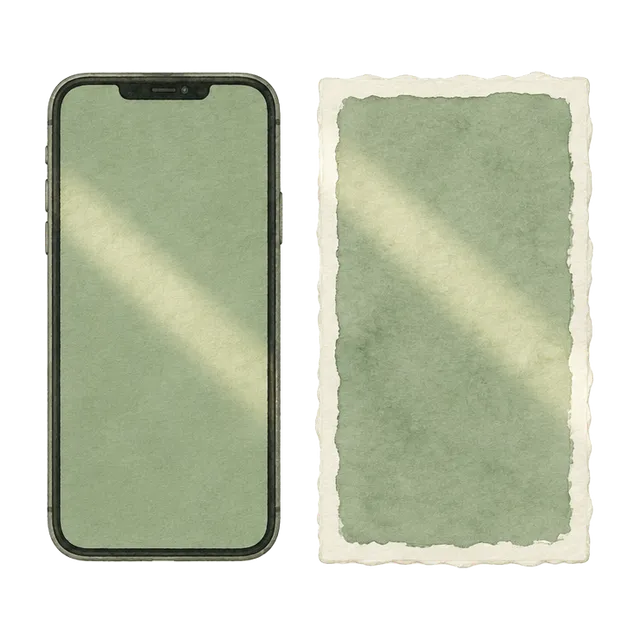
Viewing colours on screen vs real life
Why a paint colour can look different on your phone than on your wall, how we check every on-screen colour, and why Night Shift distorts undertones.
Read guide
Light reflectance value (LRV)
A 0 to 100 measure of how much light a painted surface reflects: the clearest single guide to how light or heavy a colour will feel in a room.
Read guideColour theory
The colour wheel, warm and cool, and how colours work together.
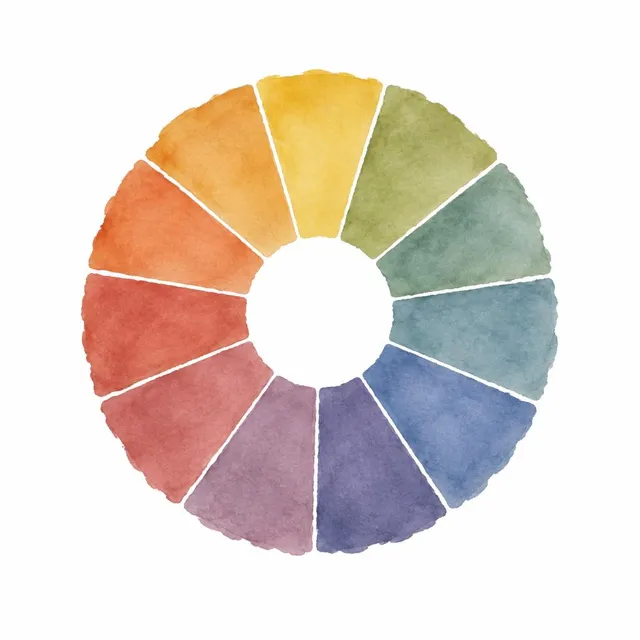
Colour theory for paint
The colour wheel, hue, value and chroma in plain English, and how complementary, analogous and tonal schemes work on real walls.
Read guide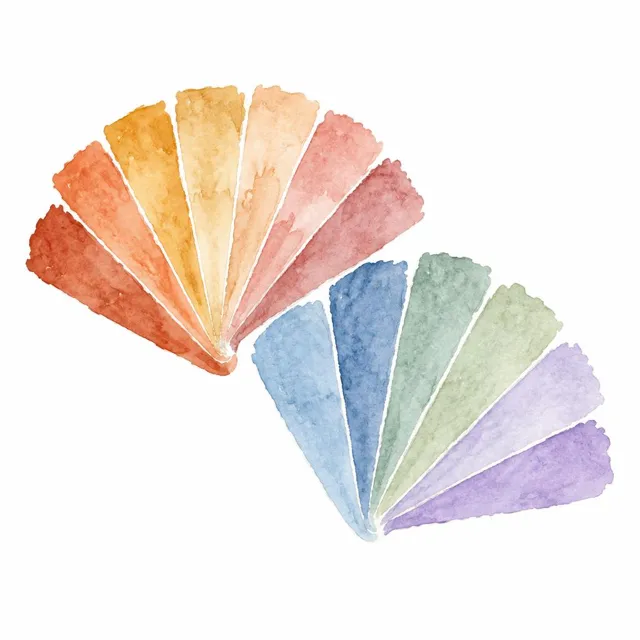
Warm and cool colours
How to tell whether a paint colour is warm or cool, why temperature is relative, and how to match it to your room’s light.
Read guidePaint care
What happens as paint dries and cures.
Colour guides
Practical science for choosing colour.

Jargon buster
Paint and colour terms in plain English, from undertone and LRV to capping and mist coats.
Read guide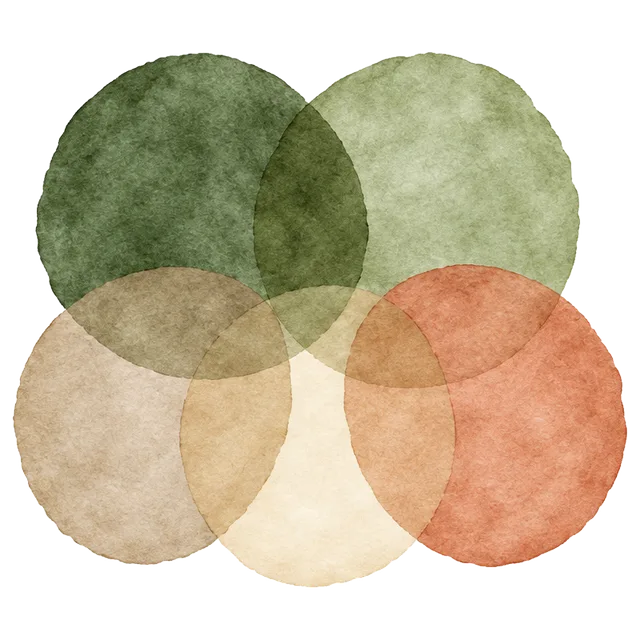
Colour compatibility
How undertone, tone and cleanliness decide which colours sit happily together.
Read guide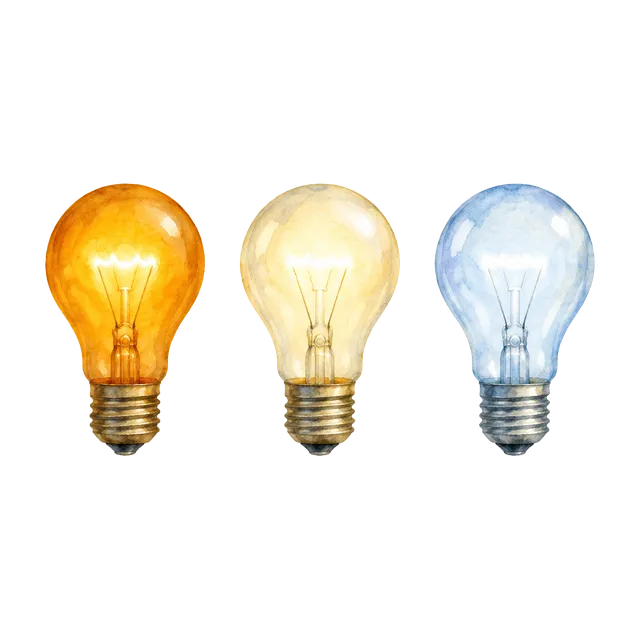
Lighting & paint colour
How bulbs, kelvin and colour rendering change the colours on your walls.
Read guide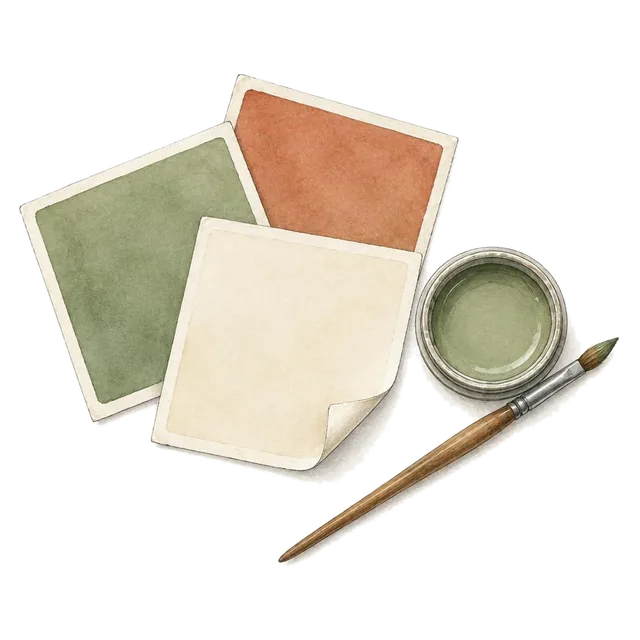
How to sample paint
Test colour properly in your own light before choosing a full tin.
Read guide