Mist Coat: How to Paint New Plaster Without It Peeling
Every paint needs a mist coat on new plaster. Ours too.
New plaster is the most absorbent surface you will ever paint. Put full-strength paint straight onto it and the plaster pulls the water out so fast that the paint sits on the surface instead of bonding, which is why so many people find their first coat peeling, cracking or flaking in sheets. A mist coat, a first coat of paint thinned with water, soaks into the plaster and gives the following coats something sound to grip. It's simple, cheap and essential.
At a glance
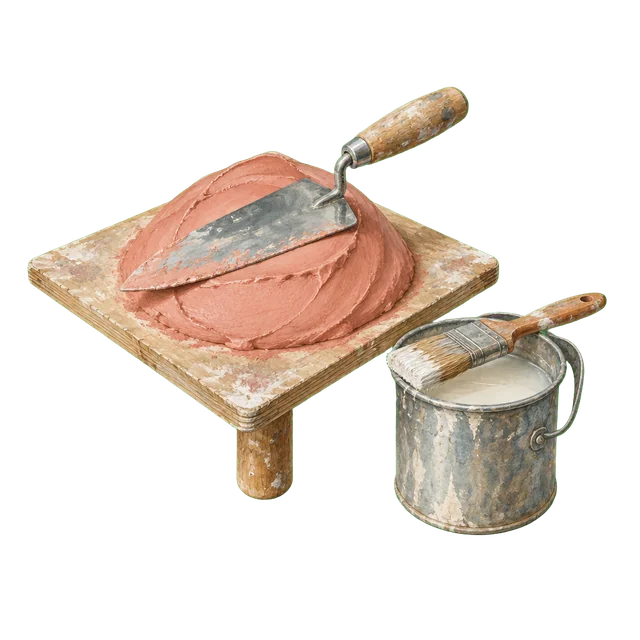
- Let new plaster dry fully: an even, pale pink all over with no dark patches.
- A mist coat is our wall paint thinned with 10–20% clean water, so it soaks in.
- Every paint needs one on new or bare plaster, including self-priming paint.
- Then fill, sand smooth and apply two full coats.
- Skipping it is the most common reason paint peels off new plaster.
First, is the plaster dry?
Even pale pink all over, with no darker patches.
Plaster dries by giving its water off into the room, and painting before it is dry traps that moisture behind the paint. Fresh plaster starts dark and lightens as it dries; it is ready when it is an even, pale pink all over, with no darker patches, and feels dry rather than cold to the touch. A thin skim in a warm, ventilated room may be ready in a week or so; thicker plaster, cold weather or a new extension with wet screed can take several weeks.
Help it along with gentle heat and ventilation rather than blasting it with heaters, which can crack it. If in doubt, wait. Your plasterer can tell you what to expect for the thickness they applied.
How to mist coat
Thinned wall paint, one even coat, then let it dry.
Thin our wall paint with 10–20% clean water, mixing it thoroughly; how much depends on the paint, so follow the tin with other brands. Apply one full, even coat over the whole surface with a roller and brush, cutting in as normal. It will look thin and patchy and soak in quickly; that is it doing its job. Let it dry for 1–2 hours, in good conditions, before the first full coat.
Once the mist coat is dry, it shows up every defect. Fill any small holes or trowel marks, let the filler dry, sand smooth and dust off, then seal the filled spots with a little thinned paint before applying two full coats over the whole wall.
Already painted without a mist coat?
Peeling sheets mean starting that area again.
If paint is peeling or flaking off new plaster, it has not bonded and will keep letting go. Scrape off everything loose back to a firm edge; on a badly affected wall, remove as much as you can. Sand the edges smooth, dust down, then mist coat the bare plaster and repaint with full coats.
If the paint is sound but the wall looks patchy, with darker or shinier areas, the plaster has absorbed unevenly. A further full coat over the whole wall usually evens it out.
Where our paint helps, and where it cannot
Self-priming still needs a mist coat on new plaster.
Our paints are self-priming on sound surfaces that have been correctly cleaned and keyed, which saves a separate primer on most previously painted walls. New or bare plaster is different: it is so absorbent that every paint needs a mist coat, ours included, and we would never tell you otherwise. After that, high opacity usually gives a solid, even colour in two full coats, and our Dead Matt finish is very forgiving on newly plastered walls.
Sample it the way we would
Step 1
Paint your peel-and-sticks
Each £5.99 sample comes with three paintable peel-and-sticks. Give them two coats and let them dry fully.
Step 2
Stick them around the room
Put them on two or three walls, including the wall opposite the window, at eye level and lower down.
Step 3
Live with them for a day or two
Look in the morning, the afternoon and under your evening lamps. Move them around until you are sure.
Your questions, answered
Do I need a mist coat on new plaster?
Yes. Every paint needs a mist coat on new or bare plaster, including self-priming paint, so the following coats bond rather than peel.
How much water do I add for a mist coat?
For our wall paint, 10–20% clean water, mixed thoroughly; it depends on the paint, so follow the tin with other brands. One even coat, then 1–2 hours before the first full coat.
How long does plaster take to dry before painting?
Until it is an even, pale pink all over. That might be a week or so for a thin skim in a warm room, and several weeks for thicker plaster or cold conditions.
Can I mist coat over new plasterboard?
Bare plasterboard and its filled joins are also absorbent, so yes, seal them with a mist coat before full coats to avoid flashing.
Keep exploring
Why Is My Paint Peeling? Causes and Fixes
Paint rarely fails on its own. Find the cause, and the fix lasts.
Why Is My Paint Patchy? How to Fix Uneven Walls and Ceilings
Patchy paint usually means the wall underneath is uneven, not the paint.
Why Is My Paint Cracking or Bubbling?
Bubbles and cracks are symptoms. Here is how to find the cause.