Stains Coming Through Paint? Water Marks, Knots and Nicotine
You cannot paint a stain away. You have to seal it in.
A brown ring on the ceiling, yellow patches on old woodwork, or knots showing through a freshly painted skirting board: stains that come back through new paint are maddening, and more coats rarely help. That's because many stains are soluble. The water in fresh paint dissolves them and carries them to the surface, so they reappear every time. The answer is to deal with the cause, then seal the stain with a primer made to block it.
At a glance
- Water stains: find and fix the leak, let it dry fully, then seal the mark.
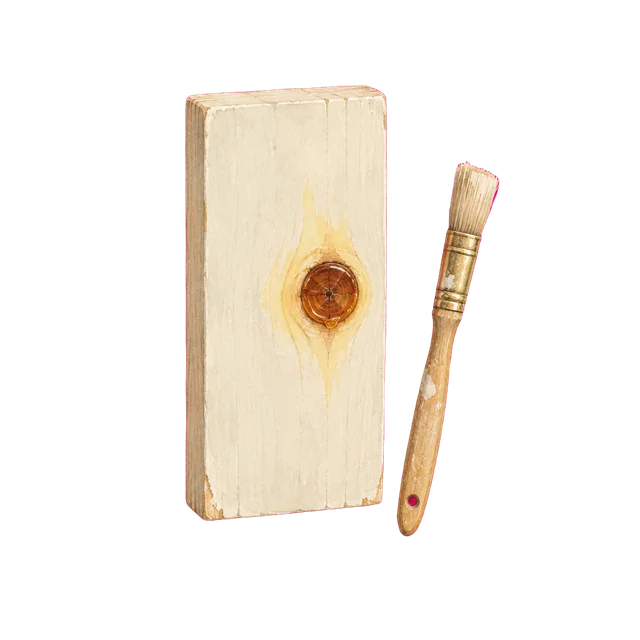
- Knots in softwood leak resin; seal them with knotting or a stain-blocking primer.
- Nicotine and smoke must be washed off, then sealed.
- More coats of any wall paint, ours included, will not stop a soluble stain.
- Once sealed, finish with two full coats over the whole surface.
Why stains come back through paint
Fresh paint dissolves the stain and carries it up.
Water marks, nicotine, smoke, some inks and the natural chemicals in wood are soluble. When you paint over them with a water-based paint, the stain dissolves into the wet film and migrates to the surface as it dries. It can look covered when wet and reappear an hour later. Extra coats just give it more to travel through. What stops it is a barrier coat the stain cannot pass: a stain-blocking primer suited to the mark, applied before you paint.
Water stains on ceilings and walls
Fix the leak first; sealing over damp only hides it.
A water stain is a symptom. Find and repair the source first, whether it is a leaking pipe, a shower tray, a roof or a gutter, remembering that water can travel some distance before it shows. Then let the ceiling or wall dry out completely, which can take weeks after a real leak. Scrape off any loose or bubbled paint and check the plaster is sound.
Seal the dried stain with a stain-blocking primer rated for water marks, following its instructions, and overlap the edges of the stain. Then paint the whole ceiling or wall with two full coats, so the repair does not show as a patch.
Knots and resin bleeding through woodwork
Softwood knots leak resin, especially with heat.
Pine and other softwoods contain resin, concentrated in the knots. Warmth, sun and heating bring it to the surface, where it yellows paint or even pushes it off. On new or bare timber, sand the knots, wipe them with a solvent such as white spirit to remove surface resin, then seal them with knotting solution or a stain-blocking primer before priming and painting. On woodwork that is already painted and showing knots, lightly sand, clean, spot-seal the knots and then repaint the whole length so it matches.
If the knot is still weeping sticky resin, scrape the resin away and let it harden before sealing. Hardwoods such as oak contain tannins rather than resin, which also bleed through water-based paint, and need a primer made to block tannin.
Nicotine, smoke and grease
Wash it off first, then seal what is left.
Nicotine and smoke leave a sticky film that spreads well beyond the obvious yellow patches. Wash every affected surface with sugar soap, rinsing with clean water, and repeat until the water runs clean. Kitchen grease needs the same treatment. Anything that still shows once dry needs sealing with a suitable stain-blocking primer before you paint. Painting over the film without washing it can also stop the paint sticking.
Where our paint helps, and where it cannot
Opacity hides colour, not soluble stains.
Our paints are self-priming on sound, clean, keyed surfaces, and their high opacity covers big colour changes in two coats, sometimes three. But self-priming is about adhesion, and opacity is about hiding colour. Neither blocks a soluble stain, and we would rather tell you that than sell you more tins. Seal the stain properly first, then our paint will give you an even, lasting finish over it.
Sample it the way we would
Step 1
Paint your peel-and-sticks
Each £5.99 sample comes with three paintable peel-and-sticks. Give them two coats and let them dry fully.
Step 2
Stick them around the room
Put them on two or three walls, including the wall opposite the window, at eye level and lower down.
Step 3
Live with them for a day or two
Look in the morning, the afternoon and under your evening lamps. Move them around until you are sure.
Your questions, answered
Why is a water stain coming through my new paint?
Water stains are soluble, so the water in fresh paint dissolves them and carries them to the surface. Fix the leak, let it dry and seal the stain with a stain-blocking primer.
Do I need knotting on new skirting boards?
On bare softwood, yes. Seal the knots with knotting solution or a stain-blocking primer before priming and painting, or resin can yellow the paint.
Will two coats cover a stain?
Not a soluble stain such as a water mark, nicotine or a knot. It will keep coming back until it is sealed.
Is self-priming paint a stain blocker?
No. Self-priming means it bonds to sound, clean, keyed surfaces without a separate primer. Stains still need a stain-blocking primer.
Keep exploring
Why Is My Paint Peeling? Causes and Fixes
Paint rarely fails on its own. Find the cause, and the fix lasts.
Why Is My Paint Patchy? How to Fix Uneven Walls and Ceilings
Patchy paint usually means the wall underneath is uneven, not the paint.
Brush Marks and Picture Framing: How to Get an Even Finish
A little brush texture is character. Ridges and frames are technique.