Orders open mid-November
Flat-Pack Furniture Paint Colours
Which colours suit painted flat-pack and laminate furniture, and why. Wall-matched shades for a built-in look, bold accents for small pieces, earthy and deep tones, and new handles to finish, all in self-priming Flat-Pack Paint.
Flat-pack furniture is practical, but the same chest of drawers or bookcase turns up in countless homes. Colour is the simplest way to make yours look chosen. Paint a wardrobe or bookcase the wall colour and it reads as built-in; use a bold shade on a small piece and it becomes a feature. Earthy and deep tones make familiar shapes look more grown-up, and new handles finish the transformation. With the right preparation, laminate and melamine take paint well.
At a glance
- Blend or feature
- Built-in look, or a piece that stands out?. Painting a wardrobe, bookcase or sideboard the same colour as the wall makes it recede and look fitted. A contrasting colour turns it into a feature. Large pieces usually look best blended; small chests, bedside tables and shelves can carry bolder colour.
- North-facing rooms
- Warm colours stay friendly in cool light.. Cool north light greys pale cool colours and deepens dark ones. Warm neutrals, terracottas and yellow-leaning greens keep painted furniture looking friendly.
- South-facing rooms
- Most shades work; cooler colours stay fresh.. Warm south light flatters most colours and can push pale warm shades towards yellow. Blues, cool greens and stony neutrals keep furniture looking fresh.
- East-facing rooms
- Bright mornings, cooler afternoons.. Check how a colour reads in the afternoon, when east-facing rooms are cooler. Balanced, muted colours look the most consistent.
- West-facing rooms
- Warm evening light suits earthy tones.. Cool in the morning and warm in the evening. Earthy and deep colours glow in evening light; look at blues in the morning too, when they can read greyer.
- Matt or Satin
- Matt for a modern look; Satin for busy surfaces.. Flat-Pack Paint comes in Matt and Satin. Satin reflects more light and wipes down easily, so it suits tops and drawer fronts that are handled daily. Matt gives a softer, contemporary finish.
- What to avoid
- Skipping the sanding, and painting floors or worktops.. Almost every failure on melamine comes from not sanding enough. Laminate floors and laminate worktops take too much wear for a painted finish to last, so keep to furniture, doors and panels.
- Sample on the piece
- Stick a painted peel-and-stick to the furniture.. Paint a peel-and-stick, let it dry and stick it to the piece in the room where it lives, next to the wall and floor. Hold your new handles against it too.
Tap any tile to read more.
Match the wall for a built-in look
Paint it the wall colour and it looks fitted.
The simplest way to make a flat-pack wardrobe or bookcase look expensive is to paint it the same colour as the wall behind it. It stops reading as a separate box, the room looks calmer, and the piece takes on the look of fitted furniture. It works in pale and dark colours alike and is a favourite technique in colour-drenched rooms.
Use Flat-Pack Paint in the same shade as your wall paint. Expect a very slight difference, because sheen changes how a colour reads: Matt sits closest to a matt wall, while Satin looks a touch lighter.
Bold colour on smaller pieces
A confident shade turns a small piece into a feature.
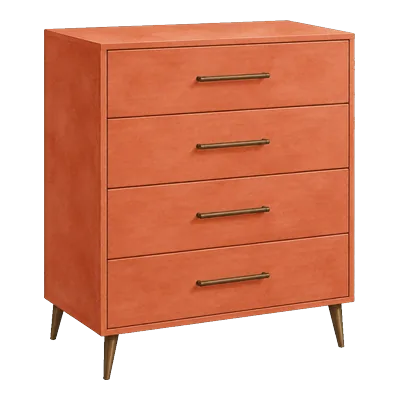
A bedside table, a small chest or a set of shelves can carry a bold colour that would overwhelm a whole wardrobe. Warm reds, oranges, yellows and clear blues add personality, especially in children’s rooms, hallways and home offices.
Take the colour from something already in the room, such as a rug, cushion or print, so the piece looks chosen rather than random. Painting just the inside of a bookcase, or the back panel, in a contrasting colour is a subtler way to get the same lift.
Earthy and muted tones
Terracotta, ochre and olive soften modern shapes.
Earthy colours make the clean, simple lines of flat-pack furniture feel warmer and more crafted. Terracotta, ochre, olive and dusty pink look natural beside wood floors, linen and plants, and they are easier to live with than brighter shades.
These colours work well with bronze, aged brass and wooden handles. Avoid shiny chrome against them, which can look cold and cheapen the effect.
Deep, grown-up shades
Dark colour makes familiar furniture look considered.
Inky blues, deep greens, aubergine and soft blacks give simple flat-pack shapes a tailored, grown-up look. They suit sideboards, media units and wardrobes in living rooms and bedrooms, particularly against a darker wall or in a colour-drenched scheme.
Dark colours show dust and fingerprints more than mid tones, so Satin is a practical choice on tops and drawer fronts that are handled every day. Take time over thin, even coats, because patchiness shows most on deep colours.
Handles, preparation and curing
New handles and careful prep finish the job.
Swapping the standard handles is one of the easiest ways to make flat-pack look bespoke. Choose hardware that complements the paint colour rather than defaulting to the original: bronze and aged brass warm earthy and deep shades, black suits pale and mid tones, and wooden knobs soften bright colours.
Flat-Pack Paint is self-priming on laminate and melamine after correct preparation: clean and degrease with sugar soap, rinse and dry, then sand the whole surface until it is uniformly dull. Its high pigment loading gives coverage in fewer coats, without a tinted undercoat for most colour changes. Remove drawers, doors and handles, but do not take the carcass apart. Full adhesion develops over a 7 day cure, and a fresh film on melamine is fragile, so handle the piece gently for the first week.
Sample it the way we would
Step 1
Paint your peel-and-sticks
Each £5.99 sample comes with three paintable peel-and-sticks. Give them two coats and let them dry fully.
Step 2
Stick them around the room
Put them on two or three walls, including the wall opposite the window, at eye level and lower down.
Step 3
Live with them for a day or two
Look in the morning, the afternoon and under your evening lamps. Move them around until you are sure.
Your questions, answered
What colour should I paint flat-pack furniture?
Match the wall for a built-in look on large pieces, or use a bold or earthy colour on smaller ones. Take the colour from something already in the room so the piece looks chosen.
Can you paint laminate or melamine furniture?
Yes, with thorough preparation. Clean and degrease, then sand the whole surface until it is uniformly dull. Flat-Pack Paint is self-priming on correctly prepared laminate and melamine.
Flat-Pack PaintDo I need a primer or undercoat?
Not on correctly prepared laminate or melamine. Flat-Pack Paint is self-priming there, and its high pigment loading means no tinted undercoat for most colour changes.
Should I take flat-pack furniture apart to paint it?
Remove drawers, doors, shelves and handles, but not the carcass. Cam locks and chipboard joints are often single-use and can be damaged by reassembly.
Can I paint laminate worktops or floors?
We do not recommend it. Worktops and floors take too much wear for a painted finish to last. Keep to furniture, doors and panels.
How do I try a colour on my furniture?
Order a £5.99 sample: it comes with three paintable peel-and-sticks. Paint one, let it dry and stick it to the piece in its room, next to the wall and your new handles.
Keep exploring
Colour Drenching: How to Do It Well
One colour, every surface, and a room that finally feels finished.
Earthy Paint Colours
Colours of clay, moss, stone and soil, built on earth pigments.
Paint Peeling or Scratching Off Laminate and Flat-Pack Furniture?
Laminate is made to repel things. Paint has to be given a grip.
Try the shade on the furniture itself
Try the shade on the furniture itself before committing. Each £5.99 sample is 60ml of real paint with three paintable peel-and-sticks: paint one, let it dry and stick it to the piece in its room, next to your wall colour. Samples are in Dead Matt, so a Satin finish will read a touch lighter.