Orders open mid-November
Garage Door Paint Colours
Which colours suit a garage door, and why. Blend with your brick, stone or render, coordinate with the front door and windows, or use a deep grey, heritage green or rich brown to frame the opening, all in weatherproof Garage Door Paint.
A garage door can take up a large share of the front of a house, so its colour changes the whole elevation. Start with the things that will not change: the brick, stone or render, the roof and the window frames. Then decide whether the door should blend into that background or stand out as a deliberate contrast. Matching the front door gives a tidy, coordinated look, but it does not have to be an exact match; a shade that sits well with the walls works just as well. Look at samples outside, on the door itself, before you commit.
At a glance
- Blend or contrast
- Decide what role the door should play.. Garage door specialists describe two approaches. Blend, with a colour from the same family as your brick, render, roof or window frames, and the door becomes part of a calm background. Contrast, with a deeper or complementary shade, and it becomes a focal point. On a wide double garage, a strong colour draws a lot of attention, so a quieter shade often keeps the front door as the main feature.
- North-facing frontage
- Mostly in shade: colours look deeper and cooler.. A north-facing front sees little direct sun, so a garage door colour reads darker and cooler than it did in the shop or on a screen. Mid tones can drift towards dull; a shade a step lighter, or one with a little warmth, usually holds up better.
- South-facing frontage
- Full sun lifts colour and shows every flaw.. Strong sun makes a colour look lighter and brighter, and low winter sun picks out dents and uneven panels. Deep colours keep their character in bright light. Paint on a mild, dry day out of strong direct sun, so the finish does not dry too fast.
- East-facing frontage
- Bright mornings, shaded afternoons.. The door is sunlit in the morning and in shade later on. Look at your sample both times of day; balanced greys, stones and greens tend to look the most consistent.
- West-facing frontage
- Cool mornings, warm evening light.. Low evening sun warms every colour on a west-facing front, so cool greys soften and warm browns glow. Check your sample in the early evening, when you are most likely to arrive home.
- Matt or Satin
- Matt for a modern look; Satin for gentle sheen.. Garage Door Paint comes in Matt and Satin. Matt gives a flat, contemporary finish and is kind to minor dents; Satin reflects a little more light, so the same colour reads a touch lighter and the panel lines show more crisply.
- What to avoid
- Wooden doors, and painting in hot sun.. Our exterior paints are flexible but not breathable, so they are made for metal and GRP-type doors, not timber garage doors. Prime bare or rusted metal first, and paint on a dry, mild day with no rain forecast.
- Sample on the door
- Stick a painted peel-and-stick to the door.. Paint a peel-and-stick, let it dry and stick it to the garage door, then step back to the pavement. Look at it in the morning and evening, next to your brick and your front door, before you buy.
Tap any tile to read more.
Blend with the brick and render
Take the colour from the walls around it.
The quietest garage door colours come from the house itself. Creams, stones and soft greiges sit comfortably beside warm red and buff brick, and they keep a large door from dominating the frontage. Against pale render, a soft stone or a light warm grey looks considered without disappearing completely.
Hold your sample against the brick or render, not just against the old door colour. Brick has its own undertone, often orange, pink or yellow, and a neutral that leans the same way will look settled, while one that leans the opposite way can look dirty or chalky by comparison.
Dark greys and soft blacks
Smart, modern and kind to everyday marks.
Charcoal greys and soft blacks are among the most popular garage door colours, and for good reason. They frame the opening crisply, suit both modern and traditional houses, and work beautifully when the front door and window frames are in a similar dark shade. Garage door makers also note that darker shades hide dirt and marks better than pale ones.
Choose the grey by its undertone. A grey with a blue lean looks crisp against white render and pale stone; a softer, browner charcoal sits more easily with warm brick. Matt keeps a dark door looking architectural; Satin gives a gentle sheen that shows the panel lines.
Heritage greens and deep blues
Rich contrast that suits period and country houses.
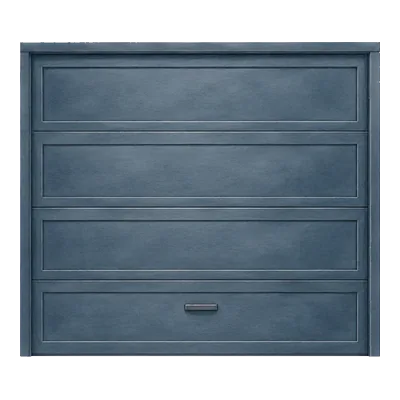
Deep greens and inky blues give a garage door presence without shouting. Heritage greens are a long-standing pairing with yellow and buff brick, and they look at home beside gardens, hedges and natural stone. Deep blues read smart and calm, especially against white or pale render.
These colours work best when they connect to something else on the house, such as the front door, a gate or painted window frames. Repeating one deep colour twice across the frontage looks planned; three different strong colours rarely do.
Rich browns and deep reds
Warm, grounded colour for traditional brick homes.
Older houses often suit richer colours than new builds. Dark browns feel rooted and traditional on red brick, and they echo the look of stained timber without the upkeep of a wooden door. Deep, muted reds can work on period properties too, as long as they sit a step darker than the brick so the two do not compete.
Warm deep tones are at their best in west light, when low evening sun brings out their warmth. On a north-facing front they read darker still, so look at a sample on a dull day as well as a bright one.
Door size, upkeep and getting it right
A big door magnifies every colour decision.
Because a garage door is so large, its colour carries more weight than a front door’s. A strong colour on a double door will dominate the house; a quieter shade lets the front entrance stay the focus. If the garage sits forward of the house, it will be seen first, which is a good reason to keep it calm and coordinated.
Pale colours brighten a frontage but show road dirt and splashes sooner; darker shades are more forgiving. Whatever the colour, a garage door lasts best when the surface underneath is sound: wash it, remove anything loose, key it, and prime bare or rusted metal before the colour goes on.
Sample it the way we would
Step 1
Paint your peel-and-sticks
Each £5.99 sample comes with three paintable peel-and-sticks. Give them two coats and let them dry fully.
Step 2
Stick them around the room
Put them on two or three walls, including the wall opposite the window, at eye level and lower down.
Step 3
Live with them for a day or two
Look in the morning, the afternoon and under your evening lamps. Move them around until you are sure.
Your questions, answered
Should my garage door match my front door?
It can, but it does not have to. Matching gives a tidy, coordinated look; a shade that complements the brick, stone or render works just as well. On a wide garage, a quieter colour keeps the front door as the main feature.
What is the most popular garage door colour?
Dark greys and soft blacks are among the most popular, alongside whites, creams and heritage greens. Popular is not the same as right for your house, so start with your brick, render and roof.
What colour garage door goes with red brick?
Creams, warm greys and soft greiges blend well with warm red brick. For contrast, deep browns and slate-like charcoals feel rooted and traditional.
Do dark garage doors show dirt?
Less than pale ones. Darker shades are more forgiving of road dirt and marks; very light colours brighten a frontage but need cleaning more often.
Can I use Garage Door Paint on a wooden garage door?
We do not recommend it. Our exterior paints are flexible but not breathable, so they suit metal and similar doors rather than timber.
Garage Door PaintHow do I try a colour on my garage door?
Order a £5.99 sample: it comes with three paintable peel-and-sticks. Paint one, let it dry, stick it to the door and look at it from the street in morning and evening light.
Keep exploring
Front Door Paint Colours
The first thing anyone sees of your home. Choose a colour that suits the house, not just the door.
uPVC Window Paint Colours
Change the colour of your frames without replacing the windows.
Garage Door Paint Peeling or Rust Coming Through? How to Fix It
Most garage door failures start with rust or a surface that was never prepared.
Try the shade on the garage door itself
Try the shade on the garage door itself before committing. Each £5.99 sample is 60ml of real paint with three paintable peel-and-sticks: paint one, let it dry and stick it to the door, then judge it from the street. Samples are in Dead Matt, so a Satin door will read a touch lighter.