Orders open mid-November
uPVC Window Paint Colours
Which colours suit painted uPVC windows, and why. Soft whites and creams that refresh tired frames, greys from pale to charcoal, heritage greens for cottages and deep shades used with care, all in self-priming uPVC & Composite Paint.
Painting uPVC window frames is one of the quickest ways to change the look of a house, and it costs far less than new windows. The right colour depends on what surrounds the frames: the brick or render, the roof, the front door and any garage door. Soft whites and creams refresh tired white frames, mid greys and heritage greens add character, and charcoal or black gives a crisp modern outline. Very dark colours need a little more thought on sunny elevations, and some homes have planning controls, so it is worth checking both before you start.
At a glance
- Frame the house
- Treat windows, doors and fascias as one scheme.. Frames, front door, garage door, fascias and gutters are read together from the street. Choose one main frame colour, then let the front door either match it or provide the single accent. Brick, render and roof colours are fixed, so start there.
- North-facing elevation
- Little sun: colours look darker and cooler.. Frames on a north-facing wall sit in shade for most of the day, so greys and greens read deeper and cooler than on the sample card. A warm white or a slightly lighter shade keeps the frames from looking heavy.
- South-facing elevation
- Strong sun: lighter-looking colour, more heat.. Sun lifts colour, so frames look lighter and brighter. It also heats them: darker frames absorb more of the sun’s energy than pale ones, and window industry guidance notes that coloured profiles can get very hot in direct sun. Going much darker than the original on a sunny elevation is worth checking with the window maker first.
- East-facing elevation
- Morning sun, shaded afternoons.. East-facing frames get the gentler morning sun and are in shade by afternoon. Balanced greys, stones and greens tend to look consistent through the day.
- West-facing elevation
- Warm, low afternoon and evening sun.. West-facing frames catch the warm afternoon sun, which softens cool greys and warms creams. They can also get hot on summer afternoons, so the same care over very dark colours applies.
- Matt or Satin
- Matt for a modern look; Satin for a factory-like sheen.. uPVC & Composite Paint comes in Matt and Satin. Satin sits closer to the gentle sheen of factory uPVC; Matt gives a softer, more contemporary look and makes the same colour read very slightly deeper.
- What to avoid
- New uPVC, painted seals and wooden windows.. uPVC needs at least twelve months outdoors before painting, and the rubber seals and glass must be masked. Our exterior paints are flexible but not breathable, so they are for uPVC and composite, never timber windows.
- Sample on the frame
- Stick a painted peel-and-stick to the frame.. Paint a peel-and-stick, let it dry and stick it on the frame itself, then look from the garden or street. A frame colour is seen against the brick and glass, not on its own.
Tap any tile to read more.
Soft whites and creams
Refresh tired white frames with a gentler white.
Most uPVC windows started life brilliant white, and many have dulled or discoloured with age. Repainting in a soft white or cream refreshes them and usually looks kinder against brick and stone than a stark white. Creams have a long tradition on cottages and period houses, and they sit happily beside both red brick and pale render.
Whites change most with the light. A warm white can look yellow in full southern sun and grey on a north wall, so look at your sample in both before you decide. If the front door or garage door is staying white, choose the closest match you can rather than a near miss.
Pale and mid greys
Quietly modern colour that suits most brick.
Pale and mid greys are a gentle step away from white. They give frames a crisp, modern outline without the weight of charcoal, and they look settled against most brick, stone and render. Greys with a green or brown lean feel softer and suit warm brick; greys with a blue lean look cleaner against white render.
Grey frames make it easy to add colour elsewhere. A deeper front door, or a garage door a few shades darker in the same family, gives the frontage depth without anything clashing.
Heritage greens and country tones
Soft greens that belong beside gardens and stone.
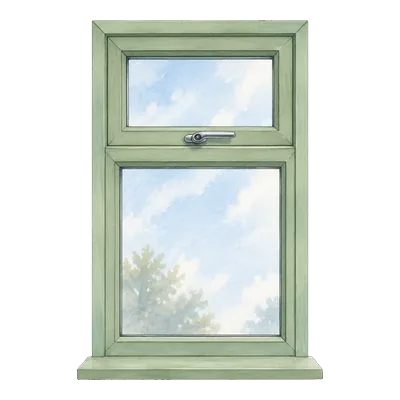
Muted greens are a popular choice for painted windows on cottages, farmhouses and older terraces, where they echo traditional painted joinery and sit naturally beside gardens and hedges. Grey-greens and soft olives are the most versatile; they look good with red brick, buff brick, stone and render alike.
Pair green frames with a cream or stone for sills and a deeper green or a warm neutral on the front door. Green and cream is a long-standing combination on traditional houses for good reason.
Charcoal, black and deep shades
Crisp outlines, chosen with sun and heat in mind.
Charcoal and black frames give windows a sharp, contemporary outline and suit both new builds and period houses with white render. Deep blues and greens can look equally striking. These colours are a confident choice and repay careful painting, because any patchiness shows clearly on a dark frame.
Dark colours absorb more of the sun’s energy than light ones, and uPVC expands as it warms. Window industry guidance is that dark-coloured profiles need special attention for this reason. If your frames were originally white and face strong sun, check with the window maker before going very dark, and use a paint made to move with the surface.
Planning rules and preparation
Check the rules, then prepare the frames well.
Repainting windows does not usually need planning permission in England. Listed buildings, and homes in conservation areas covered by an Article 4 direction, can be different, so check with your local planning authority before you change the colour. If you own a flat or leasehold house, your lease may also control external changes.
Paint only holds on uPVC that is ready for it. The plastic needs at least twelve months of weathering, then a thorough clean, rinse and dry, and a light key with fine abrasive. Mask the glass and rubber seals, paint on a dry, mild day, and apply two thin coats rather than one heavy one.
Sample it the way we would
Step 1
Paint your peel-and-sticks
Each £5.99 sample comes with three paintable peel-and-sticks. Give them two coats and let them dry fully.
Step 2
Stick them around the room
Put them on two or three walls, including the wall opposite the window, at eye level and lower down.
Step 3
Live with them for a day or two
Look in the morning, the afternoon and under your evening lamps. Move them around until you are sure.
Your questions, answered
Can you paint uPVC windows a different colour?
Yes, once the frames have weathered for at least twelve months. Clean, rinse, dry and lightly key the plastic, mask the glass and seals, then apply two thin coats of a self-priming uPVC paint.
uPVC & Composite PaintWhat is the most popular uPVC window colour?
White is still the most common, with greys, charcoal, cream and green the popular alternatives. The best choice depends on your brick, render and roof, and on whether the frames should blend or stand out.
Is it safe to paint uPVC windows black?
It can be, but dark colours absorb more heat and uPVC expands as it warms. If your frames were originally white and face strong sun, check with the window maker before going very dark.
Do I need planning permission to paint my windows?
Usually not. Listed buildings and some conservation areas with an Article 4 direction can restrict external colour changes, so check with your local planning authority first.
Can I use this paint on wooden windows?
No. It is a flexible, non-breathable coating for uPVC and composite. Timber windows need a different product.
How do I try a colour on my window frames?
Order a £5.99 sample: it comes with three paintable peel-and-sticks. Paint one, let it dry and stick it to the frame, then look at it from outside in morning and afternoon light.
Keep exploring
Try the shade on the window frame itself
Try the shade on the window frame itself before committing. Each £5.99 sample is 60ml of real paint with three paintable peel-and-sticks: paint one, let it dry and stick it to the frame, then look from outside. Samples are in Dead Matt, so Satin frames will read a touch lighter.