Orders open mid-November
Radiator Paint Colours
Which colours suit radiators, and why. Match the wall and they disappear, choose soft warm neutrals that stay looking clean, go deep in a dark room or bold for a feature, all in heat-resistant Radiator Paint.
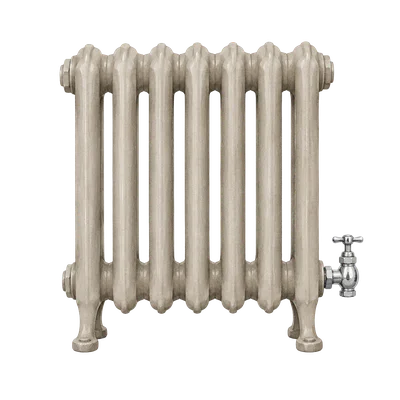
The best radiator colour is usually the colour of the wall behind it: matched, a radiator recedes and the room looks calmer. If you want something lighter, soft warm whites and stone neutrals are the most forgiving. Deeper tones disappear into dark or colour-drenched rooms, and a bold contrast turns a handsome column radiator into a feature. With ordinary non-metallic paint, colour makes little practical difference to heat output, so choose for the room, use a paint made for radiators, and try the shade on the radiator itself before you commit.
At a glance
- Blend or feature
- Decide first: should it disappear or stand out?. Most designers paint a radiator the same colour as its wall so it recedes and the furniture, art and windows take the attention. A plain panel radiator is usually best hidden this way. A decorative column radiator, or one in a period room, can earn a contrasting colour of its own.
- North-facing rooms
- Warm neutrals keep a radiator from looking grey.. Cool, even north light greys pale cool colours and makes a brilliant white radiator look stark. A warm white or stone radiator against a warm wall stays soft. Deep colours read deeper still in north light, so look at samples in the morning and afternoon.
- South-facing rooms
- Most shades work; cooler stones stay fresh.. Warm, bright south light flatters almost everything and can push pale warm colours towards yellow by midday. Cooler stones, greys and greens keep a radiator looking fresh, while deep colours keep their richness.
- East-facing rooms
- Bright mornings, cooler afternoons.. East-facing rooms are brightest in the morning and cooler later on. Balanced neutrals look consistent through the day; check how a deep radiator colour reads in the afternoon, when the light has moved round.
- West-facing rooms
- Cool mornings, warm golden evenings.. West-facing rooms start cool and finish warm. A colour that looks right at breakfast can glow by evening, so sample a radiator colour in both lights, and under your lamps after dark.
- Matt or Satin
- Matt for a soft, built-in look; Satin for a gentle sheen.. Radiator Paint comes in Matt and Satin. A higher sheen reflects more light from its surface, so the same colour in Satin reads a touch lighter and livelier and picks out every column and fin. Matt gives a softer, more architectural finish and sits closest to matt walls.
- What to avoid
- Wall paint on radiators, and painting them warm.. Ordinary wall or woodwork paint is not made for repeated heating and cooling and can yellow, crack or peel. Always paint a radiator cold, and let the finish cure before the heating goes back on fully.
- Sample on the radiator
- Stick a painted peel-and-stick on the cold radiator.. Paint a peel-and-stick, let it dry and put it on the radiator itself, next to your wall colour. Look at it by day and under your evening lamps before you buy a tin.
Tap any tile to read more.
Match the wall
Paint it the wall colour and it disappears.
Painting a radiator the same colour as the wall behind it is the designers’ favourite trick. The radiator stops interrupting the wall, the room looks calmer and larger, and nobody notices the radiator at all. It works in any colour, pale or dark, and it is the simplest way to make a plain panel radiator look intentional.
Use Radiator Paint in the same shade as your wall paint. Expect a very slight difference, because sheen changes how a colour reads: Matt sits closest to a matt or Dead Matt wall, while Satin looks a touch lighter and livelier. For a two-tone scheme, carry the skirting colour onto the radiator instead, so it reads as part of the woodwork.
Soft whites and warm neutrals
Gentler than brilliant white and far more forgiving.
Brilliant white is the default radiator colour, but it is rarely the kindest. It shows every speck of dust, it can look stark against a coloured wall, and old solvent-based white glosses are known to yellow with age, particularly with heat and in low light. Our Radiator Paint is water-based and formulated to resist yellowing under domestic heating.
A soft warm white or a pale stone sits more easily beside skirting boards and walls, and mid-tone neutrals are the most forgiving of household dust. These are the shades to choose when you want the radiator light and clean-looking without it glowing at you.
Deeper tones that recede
In dark or drenched rooms, go dark too.
In a dark room or a colour-drenched scheme, a white radiator is the one thing your eye lands on. Paint it the same deep shade as the walls and it melts away, leaving the room feeling enveloping and complete. Inky blues, deep greens, earthy browns and soft blacks all work beautifully on cast-iron columns and plain panels alike.
A dark radiator will not heat the room better. Most of a radiator’s heat leaves by warming the air around it, and ordinary non-metallic paints of any colour give out radiant heat in much the same way; it is metallic flake finishes, such as old silver radiator paints, that are known to reduce output. Pale household dust does show on very dark finishes, so plan to dust a little more often.
Bold radiators as a feature
A confident colour turns a radiator into a feature.
A handsome column radiator in a period room, a hallway or a child’s bedroom can carry a colour of its own. Take the shade from something already in the room, a fabric, a rug or a wallpaper, so the radiator looks chosen rather than random.
Bold colours look best on radiators with strong shapes, against a quieter wall. On a plain modern panel, a contrasting colour draws attention to something you may rather not notice, so save statements for radiators worth looking at.
How heat and sheen change colour
Heat, sheen and dust all change how colour reads.
Heat is the reason radiators need their own paint. Repeated heating and cooling is hard on coatings that were not made for it, and heat speeds up the yellowing that pale solvent-based paints are prone to. Paint the radiator cold, follow the guidance before turning the heating back up, and keep damp washing off it until the finish has fully cured.
Sheen changes the colour you see. The more light a finish reflects from its surface, the lighter and livelier a colour looks, so a Satin radiator can read a shade lighter than a matt wall in the same colour, and a ridged column picks up highlights along every edge. Matt keeps the colour softer and closer to the wall.
The grey streaks that build up on walls above radiators are not the radiator paint failing. They are airborne dust, soot and grease carried up by the rising warm air and left on the cooler wall. They show most on pale walls, and they are worse with candles, smoking and cooking. Regular dusting of the radiator helps; heavier staining usually needs cleaning down and repainting, sometimes with a stain-blocking coat.
Sample it the way we would
Step 1
Paint your peel-and-sticks
Each £5.99 sample comes with three paintable peel-and-sticks. Give them two coats and let them dry fully.
Step 2
Stick them around the room
Put them on two or three walls, including the wall opposite the window, at eye level and lower down.
Step 3
Live with them for a day or two
Look in the morning, the afternoon and under your evening lamps. Move them around until you are sure.
Your questions, answered
Should I paint my radiator the same colour as the wall?
Usually, yes. A radiator painted the wall colour recedes, so the room looks calmer and the radiator stops drawing the eye. Use Radiator Paint in the same shade; Matt sits closest to a matt wall.
Does the colour of a radiator affect its heat output?
Not in any way you would notice with ordinary non-metallic paint. Most of a radiator’s heat leaves by warming the air, and non-metallic paints of any colour emit heat in much the same way. Metallic flake finishes are the ones known to reduce output.
What is the best colour to paint a radiator?
The wall colour, if you want it to disappear. For a lighter radiator, a soft warm white or stone is more forgiving than brilliant white. In dark rooms, paint it the same deep shade as the walls.
Can I use wall paint on a radiator?
No. Wall and woodwork paints are not made for repeated heating and cooling and can yellow, crack or peel. Our Radiator Paint is formulated to stay stable under domestic heating.
Radiator PaintMatt or Satin for radiators?
Matt for a soft, built-in look that sits closest to matt walls; Satin for a gentle sheen that makes the colour read a touch lighter and picks out the shape of the radiator.
How do I try a colour on my radiator?
Order a £5.99 sample: it comes with three paintable peel-and-sticks. Paint one, let it dry, and stick it to the cold radiator beside your wall colour, then look at it by day and under your evening lamps.
Keep exploring
Colour Drenching: How to Do It Well
One colour, every surface, and a room that finally feels finished.
Warm Neutral Paint Colours
The warmer alternative to grey, from creamy whites to soft clay.
Dark & Moody Paint Colours
Dark colour makes a room feel enveloping, cosy and full of character.
Radiator Paint Problems: Yellowing, Peeling and Sticky Paint
Radiators heat up and cool down every day. The paint has to cope.
Try the shade on the actual radiator
Try the shade on the actual radiator before committing. Each £5.99 sample is 60ml of real paint with three paintable peel-and-sticks: paint one, let it dry and stick it to the cold radiator beside your wall colour. Samples are in Dead Matt, so a Satin radiator will read a touch lighter.