Orders open mid-November
Two-Tone Walls: Ideas & How to Paint Them
One wall, two colours, and a line that means something.
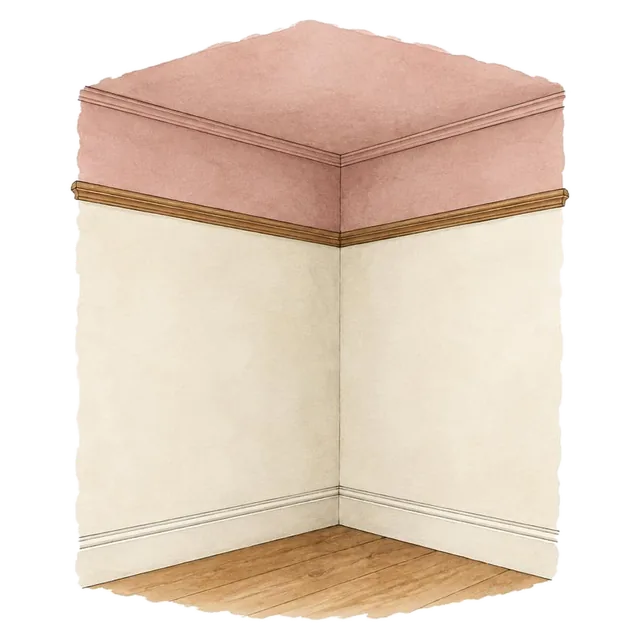
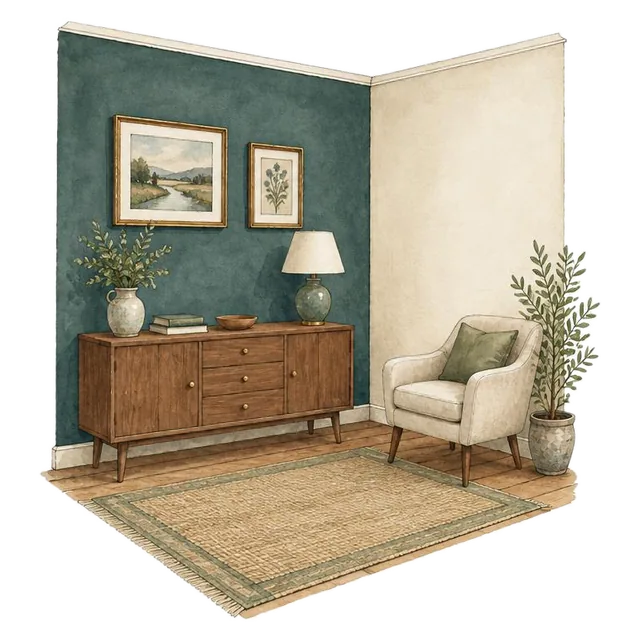
A two-tone wall splits a wall horizontally into two colours, usually darker below and lighter above. It is different from colour capping, which runs lighter-to-deeper shades of one family from walls up to the ceiling. A darker lower half anchors a room, with a paler colour above that flows into the ceiling; place the dividing line in relation to something real, such as a dado rail or the top of a bed.
At a glance
- Darker below, lighter above is the classic, practical arrangement.
- Place the line at a dado rail, furniture height or a chosen proportion.
- Pair two colours that share an undertone, or two depths of one family.
- Paint the lower colour first, then mask and paint the upper.
- Two-tone splits a wall; colour capping deepens towards the ceiling.
Where to put the line
Tie the line to something real in the room.
A dado rail gives you a ready-made line. Without one, take the height from the room: the top of a headboard, the back of a sofa or the height of a desk. A line around a third of the way up feels traditional; a higher line makes the lower colour dominant.
Choosing the two colours
Shared undertones, with a clear step in depth.
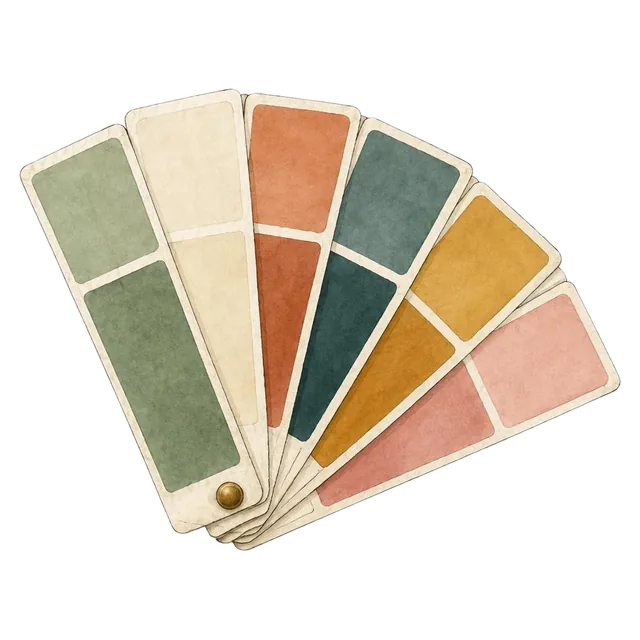
Darker below hides scuffs in hallways and children’s rooms and grounds the room. Choose two colours that share an undertone, or a light and deep shade of one family, and check there is a clear difference in so the line reads.
These deeper shades work well on a lower wall beneath a paler partner.
How to paint a two-tone wall
Lower colour first, then a level masked line.
Paint the lower colour first and let it dry. Mark a level line with a spirit level or laser, mask just above it with low-tack tape, and paint the upper colour. Remove the tape while the final coat is still slightly wet for a cleaner edge, and never leave tape on fresh paint overnight.
Carry the lower colour onto the skirting for a taller, more tailored look.
Two-tone walls or colour capping?
A split wall versus colour rising to the ceiling.
Two-tone walls divide the wall itself. Colour capping keeps the walls one colour and deepens the shade on the cornice and ceiling. Both can make a room feel taller or cosier; choose two-tone for practicality and a strong horizontal line, capping for a gentle, enveloping effect.
Sample it the way we would
Step 1
Paint your peel-and-sticks
Each £5.99 sample comes with three paintable peel-and-sticks. Give them two coats and let them dry fully.
Step 2
Stick them around the room
Put them on two or three walls, including the wall opposite the window, at eye level and lower down.
Step 3
Live with them for a day or two
Look in the morning, the afternoon and under your evening lamps. Move them around until you are sure.
Your questions, answered
Should the darker colour go on the top or bottom?
Usually the bottom. It grounds the room and hides scuffs, while a lighter top keeps the space airy.
How high should a two-tone line be?
Tie it to a dado rail or furniture height. Around a third of the way up feels traditional.
Is two-tone the same as colour capping?
No. Two-tone splits the wall; capping deepens the colour from walls up to the ceiling.
Colour capping guide