Orders open mid-November
Bathroom Cabinet Paint Colours
Which colours suit painted bathroom cabinets and vanity units, and why. Soft sage greens, calm blues, deep dramatic shades and warm mushroom neutrals, chosen against your tiles, taps and light, in moisture-resistant Bathroom Cabinet Paint.
A vanity unit is often the most visible piece of furniture in a bathroom, which makes it the perfect place for colour. There is no single best shade: bathroom designers choose against the tiles, the tap and handle finish, the light and the mood you want. Soft greens and blues feel calm, deep greens and inky shades bring drama to a small room, and warm grey-brown neutrals bridge black fittings, stone and wood. Painting a sound cabinet in a moisture-resistant paint changes the whole room without replacing anything.
At a glance
- Tiles, taps and handles
- Read the fixed finishes first.. Tiles, basin, worktop and taps are rarely changing, so choose the cabinet colour against them. Look at the undertone of the tiles and any veining in the worktop. Chrome and nickel feel cooler beside blues and greys; brass and bronze warm up greens, blues and neutrals. Choose new handles to complement the colour.
- North-facing bathrooms
- Warmer greens and neutrals avoid a chilly look.. Cool north light can make blue and grey cabinets look cold. Greens with a yellow lean, mushroom neutrals and warm deep shades hold their warmth. Many bathrooms have small or obscured windows, so check samples under your own bathroom lighting as well.
- South-facing bathrooms
- Blues and cool greens stay fresh.. Warm, bright south light flatters most colours. Cooler blues, blue-greens and stony greys keep a vanity looking fresh rather than yellow at midday.
- East-facing bathrooms
- Bright mornings when you use it most.. East light is brightest in the morning, which is when many bathrooms are busiest. Soft greens and blues look clean and lively then; check how deeper colours read under artificial light in the evening.
- West-facing bathrooms
- Warm evening light flatters deep tones.. Cool in the morning and golden in the evening. Deep greens, plums and warm neutrals glow at bath time; look at cool blues in the morning too, when they can read greyer.
- Matt or Satin
- Matt for a soft furniture look; Satin to wipe down.. Bathroom Cabinet Paint comes in Matt and Satin. Satin reflects more light, so the colour reads slightly lighter and the surface is easy to wipe. Matt gives a softer, more furniture-like finish. Both are scrubbable once fully cured.
- What to avoid
- Painting over water damage or soap film.. Fix leaks and repair swollen panels first; paint will not hold on damaged board. Clean off soap residue, sand to a key and prime bare MDF or wood. Keep the room ventilated and allow the full 7 days before heavy use or cleaning.
- Sample beside the basin
- Stick a painted peel-and-stick to the cabinet.. Paint a peel-and-stick, let it dry and stick it on the cabinet door beside the tiles, tap and handles. Look at it in daylight and under the bathroom lights before you buy.
Tap any tile to read more.
Sage and soft greens
Gentle, natural colour that suits most bathrooms.
Sage and soft grey-greens are among the most popular painted vanity colours because they are calming and easy to live with. They sit happily with warm white, pale stone and timber, and they suit both chrome and brass: brushed nickel keeps the look subtle, while warm brass adds a little more contrast.
Greens with a grey lean are the most forgiving in a small, dim bathroom. Greens with more yellow feel warmer and suit north light; cooler blue-greens stay fresh in sunny rooms.
Calm blues, from soft to ink
Blues that feel restful rather than cold.
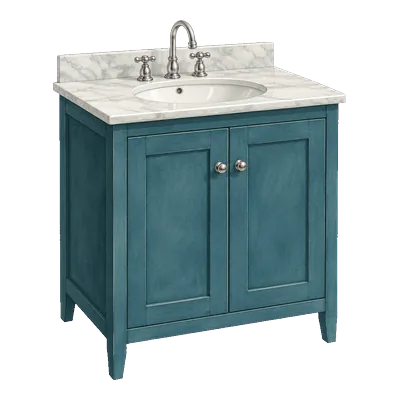
Blue is a natural bathroom colour, and on a vanity it can feel calm without turning the room cold. Soft blue-greys look airy against pale marble and white tiles. Ink, petrol and muted navy give a larger vanity more presence and feel warmer when paired with timber, warm lighting or a beige-veined surface.
If the bathroom faces north or has little daylight, choose a blue with a green or grey lean rather than a clear, cool blue, and look at the sample under your evening lights.
Deep greens and dramatic shades
Rich colour that makes a small room feel considered.
Forest and bottle greens, deep plums and soft blacks turn a vanity into a statement. Designers often balance a deep cabinet with lighter walls so the room does not close in, and repeat the colour sparingly elsewhere, perhaps on a mirror frame or a single shelf.
Dark colours suit small cloakrooms and en-suites surprisingly well, because they make the cabinet the feature rather than the size of the room. Brass or bronze handles look particularly good against them.
Mushroom, stone and warm neutrals
Grey-browns that bridge metal, stone and wood.
A grey-brown mushroom or a warm stone gives a vanity depth while staying flexible. These shades bridge black fittings, warm stone and wood more easily than a flat cool grey, and they suit both period and contemporary bathrooms.
For a lighter scheme, a soft warm white or pale greige keeps the bathroom bright without the clinical look of brilliant white. Look at it next to the bath and basin, because sanitaryware whites vary and a near miss can make either look dull.
Moisture, preparation and curing
A sound, clean cabinet holds paint for years.
Bathrooms are humid, so preparation matters more than the colour. Fix any leaks and repair or replace swollen panels before painting. Clean off soap residue with sugar soap, rinse and dry completely, sand to a key and prime any bare MDF or wood.
Apply thin, even coats, keep the room ventilated, and allow the full 7 days before heavy use or cleaning. A fresh finish is at its most fragile in those first days, so keep wet towels and steam away from it where you can.
Sample it the way we would
Step 1
Paint your peel-and-sticks
Each £5.99 sample comes with three paintable peel-and-sticks. Give them two coats and let them dry fully.
Step 2
Stick them around the room
Put them on two or three walls, including the wall opposite the window, at eye level and lower down.
Step 3
Live with them for a day or two
Look in the morning, the afternoon and under your evening lamps. Move them around until you are sure.
Your questions, answered
What colour should I paint my bathroom vanity?
Choose against your tiles, taps and light. Sage and soft greens are the calmest and most versatile, blues feel restful, deep greens and plums bring drama, and mushroom neutrals bridge stone, wood and black fittings.
Can I paint a bathroom vanity unit?
Yes. Clean off soap residue, sand to a key, prime any bare MDF or wood, then apply thin, even coats of a moisture-resistant cabinet paint.
Bathroom Cabinet PaintShould the vanity be the same colour as the walls?
It can be, for a calm colour-drenched look, but a vanity is also an easy place for contrast. A deep cabinet against lighter walls is a designer favourite in small bathrooms.
What handles go with a painted vanity?
Choose them to complement the colour and your taps. Chrome and nickel suit blues and greys; brass and bronze warm greens, blues and neutrals.
Matt or Satin for bathroom cabinets?
Satin reads slightly lighter and wipes down easily; Matt gives a softer, more furniture-like finish. Both are scrubbable once fully cured.
How do I try a colour on my bathroom cabinet?
Order a £5.99 sample: it comes with three paintable peel-and-sticks. Paint one, let it dry and stick it on the cabinet beside the tiles and taps, then check it in daylight and under the bathroom lights.
Keep exploring
Bathroom Paint Colours
Steam, small windows and bright mirror lights. Choose a colour that copes with all three.
Sage Green Paint
The quiet green that gets on with everything.
Cloakroom & Downstairs Loo Paint Colours
The smallest room in the house is the best place to be brave.
Kitchen Cabinet Paint Colours
Start with what is staying: the worktop, the floor and the light.
Try the shade on the cabinet itself
Try the shade on the cabinet itself before committing. Each £5.99 sample is 60ml of real paint with three paintable peel-and-sticks: paint one, let it dry and stick it to the cabinet door beside your tiles and taps. Samples are in Dead Matt, so a Satin cabinet will read a touch lighter.