At a glance
- 2700K: very warm white, close to an old filament bulb, for cosy living rooms and bedrooms
- 3000K: warm white, slightly crisper, and kind to most colours
- 4000K: cool white, clear and bright for kitchens, bathrooms and tasks, but can feel harsh at night
- Daylight (about 5000–6500K): blue-white indoors, best kept for work areas
- Kelvin is colour, not brightness: check lumens for brightness
Colour temperature describes the colour of white light by comparison with a heated object, which glows from red through yellow to blue-white as it gets hotter. It is measured in kelvin (K). Confusingly, a higher number looks cooler: lower kelvin means warmer, more yellow light, and higher kelvin means cooler, bluer light.
Useful reference points: an ordinary filament bulb was about 2700K and a halogen about 3000K; typical office lighting is about 4000K; and the colour scientists’ standard for average daylight (CIE illuminant D65) is about 6500K. European lighting practice groups light up to about 3300K as warm white, 3300 to 5300K as neutral white and above 5300K as cool, bluish white.
The Energy Saving Trust describes very warm white bulbs as similar in tone to old incandescent bulbs, often at 2700K, and suited to living areas and bedrooms.
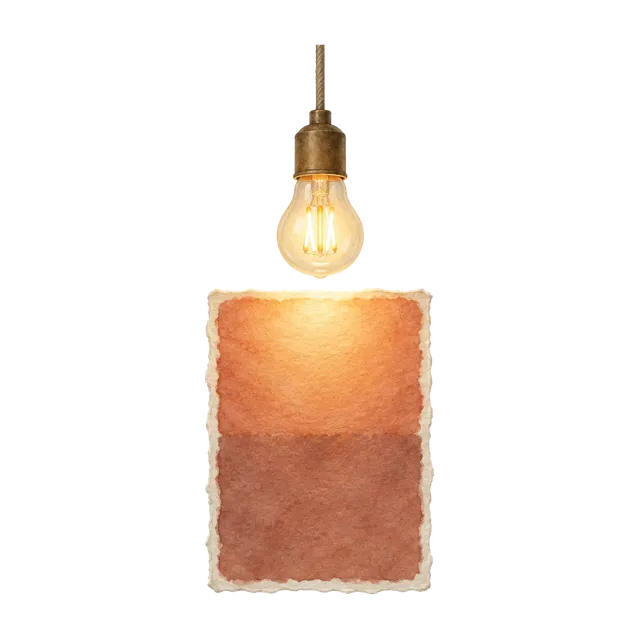
For paint, 2700K flatters reds, terracottas, ochres, warm neutrals and dirty, earthy colours, and makes dark schemes feel cocooning. Blues, blue-greens and cool greys look softer and greyer, and pure whites take on a creamy cast.
Warm white bulbs run from 2700 to 3000K and, in the Energy Saving Trust’s words, suit most household lighting. 3000K is a touch less golden than 2700K, close to the colour of a halogen bulb.
For paint, 3000K is the forgiving middle ground. Warm colours keep their glow, whites look clean rather than creamy, and cooler colours lose less of their character. It works well in kitchens, hallways and open-plan spaces that mix warm and cool colours.
Cool white bulbs, at 4000 to 4500K, offer a purer white but can be a bit harsh for many rooms, according to the Energy Saving Trust, and might suit bathrooms and kitchens.
For paint, 4000K keeps blues, greens, cool greys and brilliant whites crisp and true to type. Warm neutrals, reds and yellows can look flatter and greyer, and a warm, cosy scheme can feel clinical in the evening. It is at its best as task lighting, or in rooms used mostly by day.
Daylight bulbs sit at around 5000 to 6500K, the colour of a bright sky. Indoors after dark they look distinctly blue-white, and most people find them stark in relaxing rooms.
They are often sold as showing “true colour”, but accuracy depends on colour rendering (CRI), not colour temperature. A daylight bulb with a low CRI shows colours less faithfully than a warm white with CRI 90+.
Mixing colour temperatures in one room makes the same wall look patchy in colour: warm near the lamp, cool under the ceiling light. Keep one colour temperature per room, and across rooms that open into each other.
Even bulbs with the same kelvin figure can differ slightly between makes, because UK rules allow a small tolerance in LED colour, so fit the same bulb throughout a room. If you want both, choose tunable white or dim-to-warm bulbs: tunable white lets you change the colour temperature, often across a range from about 2700K to 6500K, and dim-to-warm bulbs grow warmer as they are turned down.
If your scheme is warm (terracottas, ochres, warm neutrals, pinks and earthy greens), 2700 to 3000K will flatter it. If it is cool (blues, blue-greens, cool greys and crisp whites), 3000K keeps more of its character, and 4000K suits it in rooms used mostly by day.
If a room is lit mostly by warm lamps, test cool colours carefully in the evening: they are the ones most likely to surprise you.
Colour temperature room by room
| Room | Suggested colour temperature | Why |
|---|---|---|
| Living room, snug | About 2700K | Very warm white suits living areas |
| Bedroom | About 2700K | Very warm white tends to suit bedrooms |
| Hallway, landing, dining room | 2700–3000K | Warm white suits most household lighting |
| Kitchen | 3000K, with brighter task lights | Clearer light helps with tasks; cooler light might suit kitchens |
| Bathroom | 3000–4000K | Warm for a calm feel, cooler for a crisp one |
| Home office, utility | 3000–4000K | A cooler, clearer light where tasks matter |
Your questions, answered
Is 2700K or 3000K better for a living room?
Both are warm white. 2700K is cosier and more golden; 3000K is slightly cleaner and kinder to cool colours. For a warm scheme choose 2700K; for blues, greens and greys, 3000K.
Is 4000K brighter than 3000K?
Not necessarily. Kelvin describes the colour of the light, not its brightness. Brightness is measured in lumens.
What does “daylight” mean on a bulb?
A blue-white light, typically around 5000 to 6500K, designed to resemble bright daytime light. It does not guarantee accurate colour: check the CRI.