At a glance
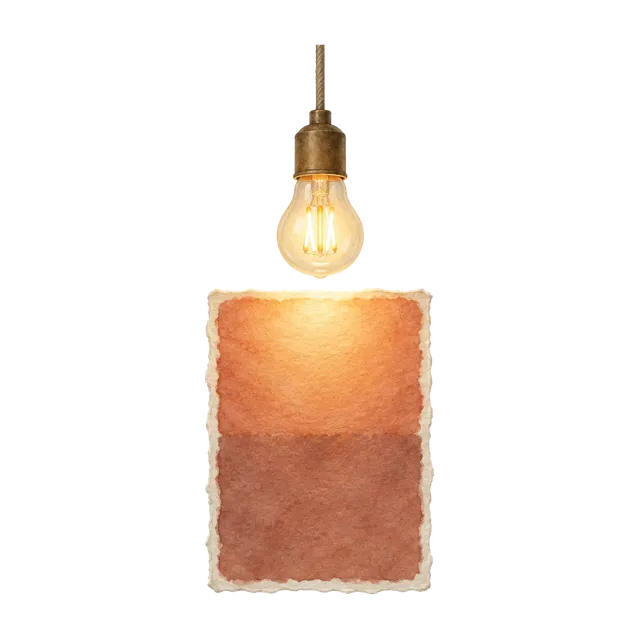
- Warm white bulbs (2700–3000K) enrich reds, terracottas and yellows, and soften blues
- Cool white bulbs (4000–4500K) sharpen blues, greens and greys, but can flatten warm colours
- Daylight bulbs are bluer still and can feel stark in the evening
- Look for CRI 90 or above wherever colour matters
- Judge your samples under the bulbs you will actually live with
Paint has no glow of its own. Its pigments absorb some wavelengths of light and reflect the rest back to your eye, and that reflected light is the colour you see. Every bulb gives out its own mix of wavelengths: warm white bulbs give out relatively more red and yellow light and less blue, while cool white and daylight bulbs give out more blue.
A colour can only reflect what is in the light falling on it. So the same wall reads warmer under one bulb and cooler under another, and the undertone you barely noticed by day can come forward at night. Your eyes also adjust to the light in a room, which is why the change can feel subtle while you sit there, then obvious when you step in from daylight or compare two rooms.
Bulb boxes describe the colour of their light with a name and a number in kelvin (K). The lower the number, the warmer and more golden the light; the higher the number, the cooler and bluer it looks. UK rules require the packaging to show this figure, rounded to the nearest 100K.
Energy Saving Trust guidance describes very warm white bulbs as having a similar tone to old incandescent bulbs, often at 2700K, and suiting living areas and bedrooms. Warm white bulbs, at 2700 to 3000K, suit most household lighting. Cool white, at 4000 to 4500K, offers a purer white but can be a bit harsh for many rooms, and might suit bathrooms and kitchens. Bulbs sold as daylight sit higher still, typically around 5000 to 6500K.
Under warm white bulbs, reds, terracottas, ochres, pinks and creams glow and feel enveloping. Blues and blue-greens have less blue light to reflect, so they can look greyer, greener or more muted, and a cool grey may drift towards beige.
Under cool white and daylight bulbs, blues, greens, cool greys and crisp whites look clean and true to type. Warm neutrals, reds and yellows can look flatter and a little grey, and a white with a warm undertone can look surprisingly stark.
Muted (dirty) colours tend to shift more than clean, bright ones, because their complexity responds to every change in the light. That is part of their charm, and the best reason to test them under your own lamps.
Kelvin tells you the colour of a bulb’s light. Colour rendering is a separate question: once that light lands on your walls, how truthfully does it show their colours? Two bulbs both labelled 2700K can look identical when you glance at them, yet one can make your paint look richer and truer than the other.
The difference comes from the mix of colours inside the light. A wall can only show a colour that is present in the light falling on it, and some LEDs are thin on certain colours, deep reds especially. The colour rendering index (CRI) scores how faithfully a bulb shows colours, up to 100.
Bulbs sold in the UK must normally be CRI 80 or above, and the packaging must say what it is. The Energy Saving Trust says 80 or more is good for most household tasks. Where you want to see paint colours as faithfully as possible, look for 90 or above.
With LEDs, watts measure power use rather than brightness, so check the lumens. The Energy Saving Trust gives approximate equivalents: about 470 lumens for an old 40 watt bulb, 800 lumens for 60 watts, 1,050 lumens for 75 watts and 1,520 lumens for 100 watts.
Brightness changes colour too. Our eyes see colour with cells that work best in good light; as light fades, other cells that see only light and dark take over. So in dim light walls look darker and more muted, and a deep colour that looks rich under several lamps can look almost black in a single dim pool of light.
How much of that light comes back off the walls depends on the paint. A colour’s light reflectance value (LRV) describes the share of light it reflects: pale, high-LRV colours return more of each lamp’s light to the room, while deep, low-LRV colours absorb more of it, so a dark scheme usually needs more lamps to feel equally bright.
Not every LED will dim, and an older dimmer switch may not work properly with LEDs, so check compatibility before buying. UK rules require the packaging to warn you if a bulb cannot be dimmed, or only works with certain dimmers. Most standard LEDs keep the same light colour as they dim. Dim-to-warm bulbs, by contrast, behave like old filament bulbs and grow warmer as they are turned down.
A single central ceiling light washes a room from above and leaves corners in shade. Layering combines general light with lamps, wall lights and task lights at different heights, so walls are lit more evenly and colours keep their depth.
Dark, dirty and colour-drenched schemes come into their own here. Low pools of warm light make deep greens, inky blues and earthy reds feel cocooning in the evening. Plan the lamps alongside the paint.
Keep one colour temperature across a room, and across rooms that open into each other. Mixing a cool ceiling light with warm lamps makes the same wall look patchy in colour. Even bulbs with the same kelvin figure can differ slightly between makes, because UK rules allow a small tolerance in LED colour, so buy the same bulb for every fitting in a room.
Energy Saving Trust guidance suits very warm white to living areas and bedrooms, warm white to most general household lighting, and suggests cool white might suit bathrooms and kitchens.
In practice: very warm white (around 2700K) for living rooms, snugs and bedrooms; warm white (around 3000K) for hallways, dining rooms and kitchens, with brighter task lighting over worktops; and warm or cool white in bathrooms, depending on whether you want a calm or a crisp feel.
Daylight is not one colour. The colour scientists’ standard for average daylight (CIE illuminant D65) has a colour temperature of about 6500K, far bluer than a warm white bulb, while low morning and evening sun is noticeably warmer. North-facing rooms receive cooler, indirect light, south-facing rooms warm and bright light, and east- and west-facing rooms change through the day.
Through a British winter, many rooms are seen mostly by lamp light. A colour chosen on a bright afternoon can feel quite different at seven in the evening, so always look at your samples after dark as well.
Fit the bulbs you plan to live with before you choose. Paint two coats onto your peel-and-sticks, let them dry, and place them on the walls that matter, near your lamps and away from them.
Look in the morning, the afternoon and in the evening with your usual lamps on. If a colour only works in one of those lights, it is worth trying a different bulb or a different shade before you commit.
Common bulb colours and what they do to paint
| Bulb | Colour temperature | How it feels | What it does to paint |
|---|---|---|---|
| Very warm white | About 2700K | Golden and cosy, like an old filament bulb | Warm colours glow; blues and cool greys turn softer and greyer |
| Warm white | 2700–3000K | Warm but a little cleaner | Kind to most colours; whites look soft rather than stark |
| Cool white | 4000–4500K | Clear, bright white | Blues, greens and crisp whites look clean; warm neutrals can look flatter |
| Daylight | About 5000–6500K | Blue-white, like a bright sky | Cool colours look sharp; warm colours can look cold at night |
Your questions, answered
Do LED bulbs change paint colour?
Every bulb changes how paint looks, LED or not. What matters is the colour temperature (warm or cool, in kelvin) and the colour rendering (CRI). A warm white LED with a CRI of 90 or more shows paint colours much as an old filament bulb did.
Which bulbs show the truest paint colour?
Colour accuracy comes from colour rendering, not from the colour temperature. Choose a bulb with CRI 90 or above, in the colour temperature that suits the room, and judge your paint under that.
Are daylight bulbs good for a living room?
Most people find them too blue for relaxing rooms in the evening. The Energy Saving Trust suggests warm white for most household lighting, and very warm white for living areas and bedrooms.
Why does my paint look different at night?
In the evening your walls are lit by bulbs instead of daylight. Most home bulbs are warmer than daylight and much dimmer, so colours look warmer, darker and less vivid, and undertones can come forward.