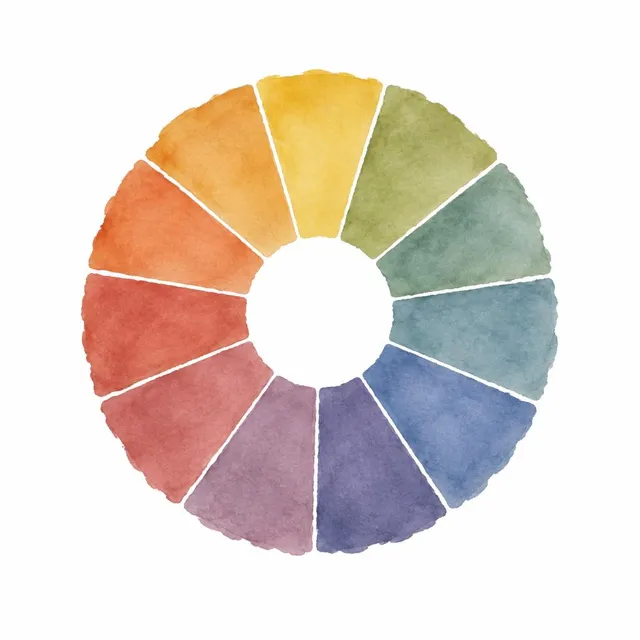
Isaac Newton showed that white light splits into a spectrum of colours, and in Opticks, published in 1704, he bent that spectrum into a circle: the first colour wheel. Painters and designers have used versions of it ever since. The familiar decorating wheel starts with three primaries, red, yellow and blue; mixes them into three secondaries, orange, green and violet; then fills the gaps with six tertiaries such as blue-green and red-orange, giving twelve colour families. It is a simplification, because real paint colours are far more subtle than twelve wedges, but it gives you a map of how colours relate.
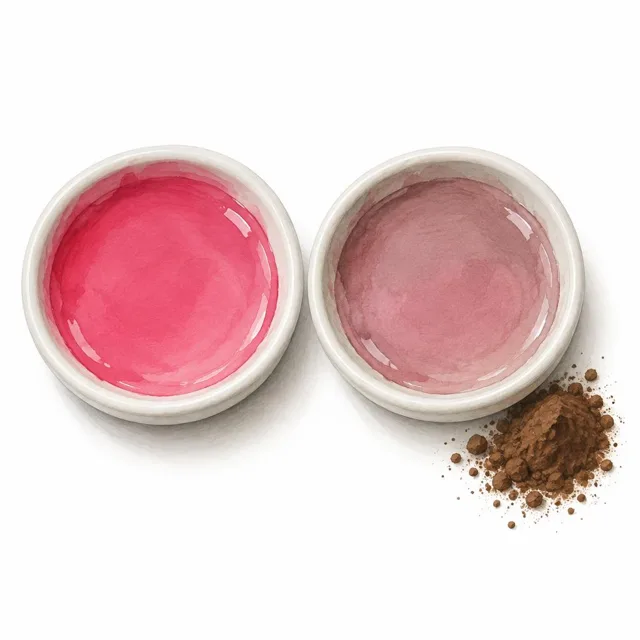
Every paint colour can be described in three ways. Hue is its colour family: red, yellow, green and so on. Value is how light or dark it is, which for paint is measured as . Chroma is how intense it is: a tomato red is high chroma, a brick red mid, a putty colour very low. Most liveable interior colours are tints, tones and shades, softened with white, grey, black or a complementary colour, rather than pure hues. That is what makes a colour feel muted or dirty rather than clean and bright, and it is why two colours of the same hue can feel completely different in a room.
Three schemes cover most rooms. Complementary colours sit opposite each other on the wheel, such as blue and orange or green and red. Together they create strong contrast and energy, so decorators usually let one lead and use a muted version of the other. Analogous colours sit side by side, such as blue, blue-green and green, and feel harmonious and easy to live with. Tonal, or monochromatic, schemes use several lightnesses of one colour family, which is the idea behind colour capping and tonal drenching. Whichever you choose, the proportions matter as much as the colours, which is where the 60-30-10 rule helps, and undertone decides whether two colours that should work really do. Test the pairing in your own light before committing.
Colour theory is a guide, not a rulebook. Light, undertone and the materials in your room all change how colours behave together, so always test samples side by side.